
Oak Leaves Browning From the Edges in Midsummer? Oak Wilt Warning Signs
November 18, 2026
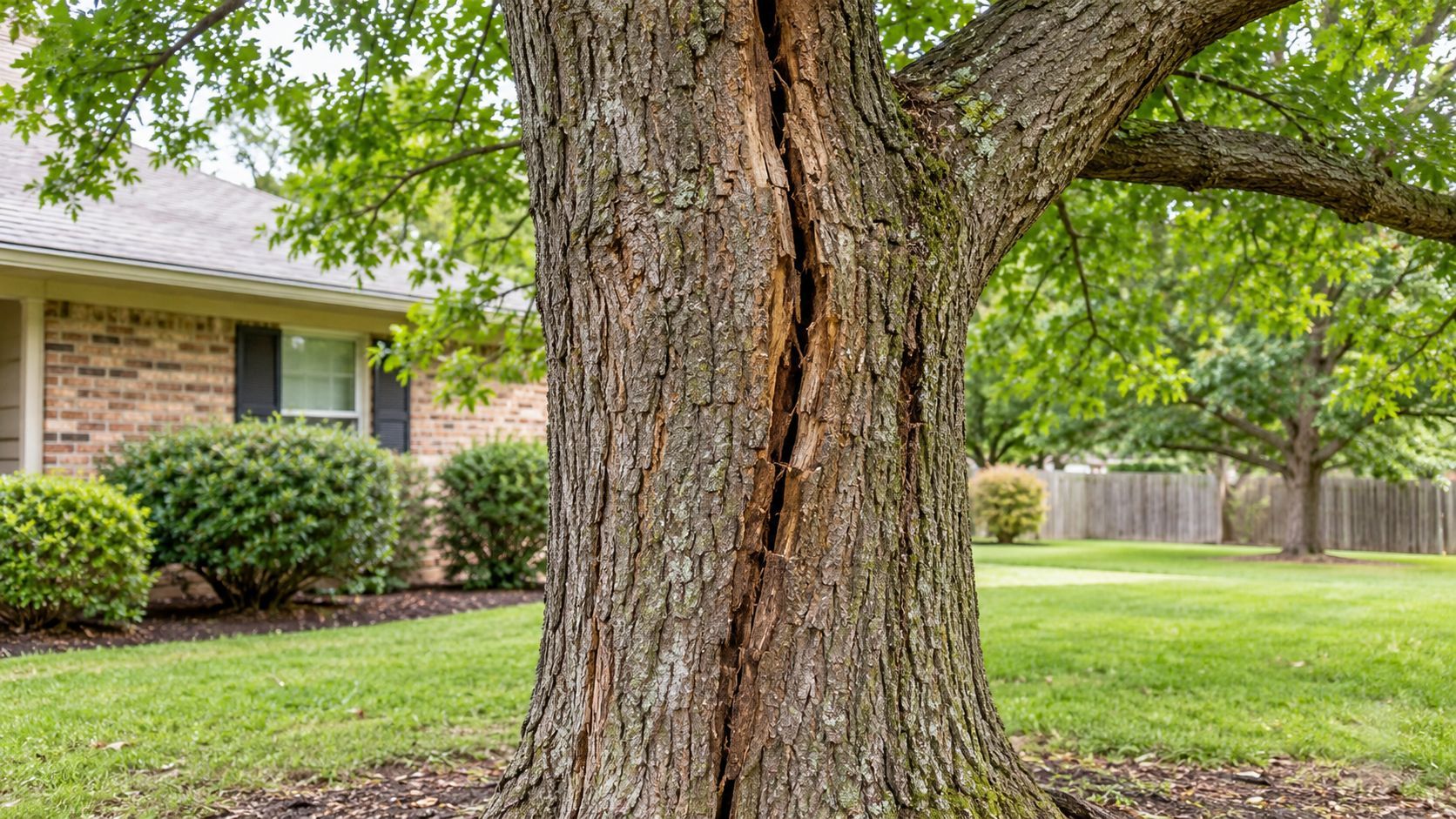
WARNING: Never push on, prune, or stand under a leaning tree with cracked soil or lifted roots on one side. It can drop with almost no warning, and getting close to inspect it is how people get hurt. Have it checked from a safe distance.
WARNING: Never push on, prune, or stand under a leaning tree with cracked soil or lifted roots on one side. It can drop with almost no warning, and getting close to inspect it is how people get hurt. Have it checked from a safe distance.
Quick Answer: Oak leaves that brown from the edges in midsummer can mean oak wilt, but they can also mean drought scorch or a leaf disease, and only a lab test settles it. The warning signs that point toward oak wilt are leaves that turn bronze or pale from the tips inward, yellow veins that turn brown on a live oak, a branch or whole crown that drops leaves weeks too early, dieback that moves down from the top, and another oak nearby that died last year. Do not prune the tree. Photograph it, note which limbs are affected, and have an arborist take a sample so you know what you are dealing with before the disease reaches neighboring oaks.
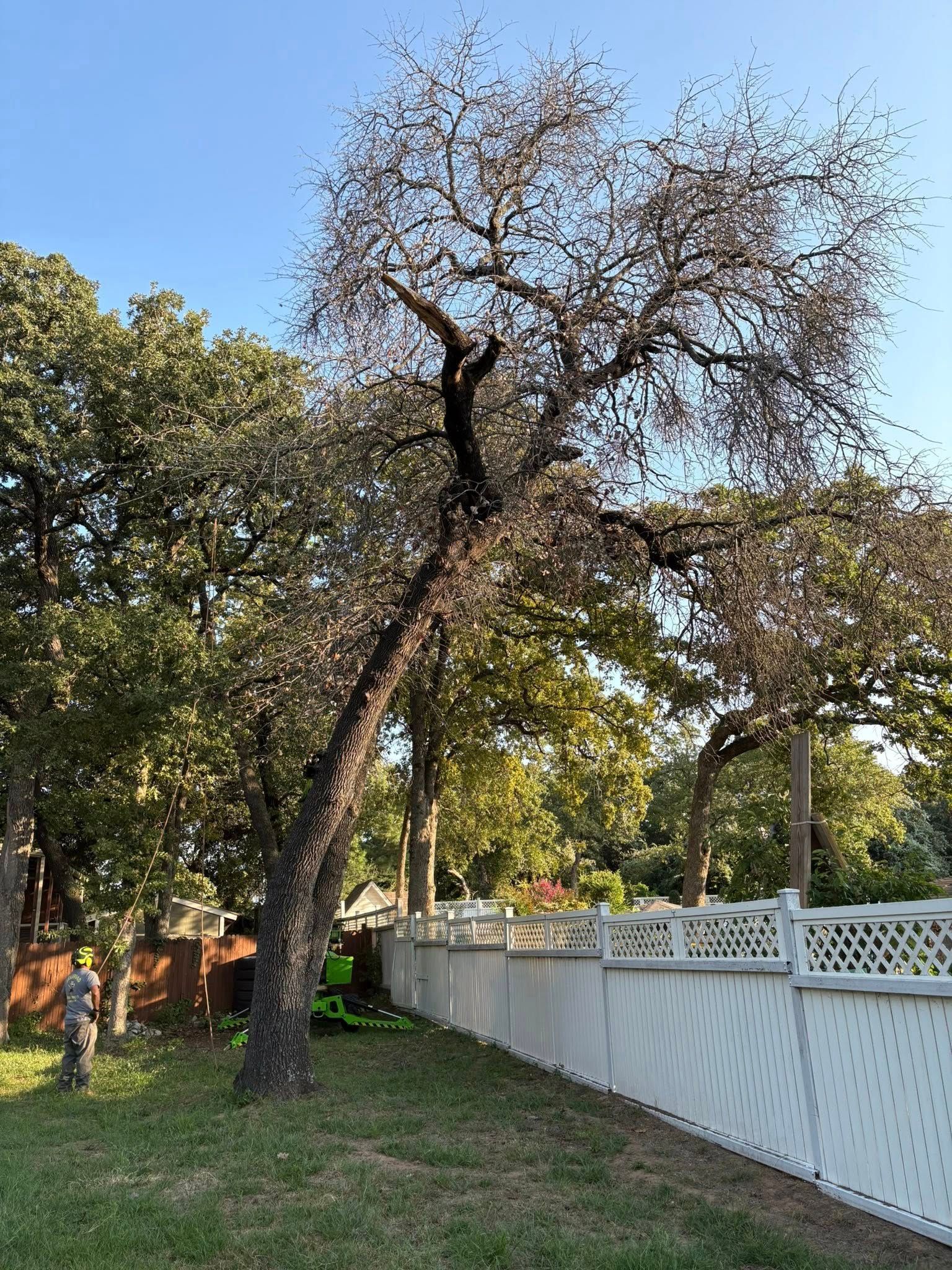
It was the third week of August when you noticed it. You were hauling the hose across the yard when you glanced up at the big oak that shades the back patio, and the outer edge of the canopy looked scorched. The leaves were not falling yet. They were turning a dull bronze at the tips and margins, as if someone had held a lighter along the edges. A week later, a few of them had dropped, and the browning had crept toward the middle of the leaf.
North Texas summers are hard on every tree, so it is natural to tell yourself the heat did it. Sometimes that is exactly right. But oak wilt is real in this part of the state, it moves fast, and the early symptoms look a lot like ordinary summer stress. Knowing which signs separate the two can save a tree, and it can save the oaks around it too.
Why Oak Wilt Looks Like Browning Leaves
Oak wilt is caused by a fungus that grows inside the water carrying tissue of an oak. As the tree fights the infection, it plugs its own vessels to keep the fungus from spreading, and that plugging also cuts off the flow of water up to the leaves. The leaves wilt, discolor, and die from the outside in, the same way they would if the roots had been cut. That is why the first thing you see is browning at the margins and tips.
The disease behaves differently depending on which kind of oak you own, so the pattern on the leaves matters as much as the fact that they are brown.
What Oak Wilt Looks Like in Each Type of Oak
Live oaks. The hallmark sign is yellowing along the veins, with the yellow turning brown while the rest of the leaf stays green. You may see it first on just a few branches in the upper canopy. Leaves then drop quickly, and the symptoms spread to larger sections of the tree. Because live oaks share root connections, the same pattern often shows up in a ring of trees around the first one. Some live oaks die within a few months of showing symptoms, while others limp along for a year or more.
Red Oaks
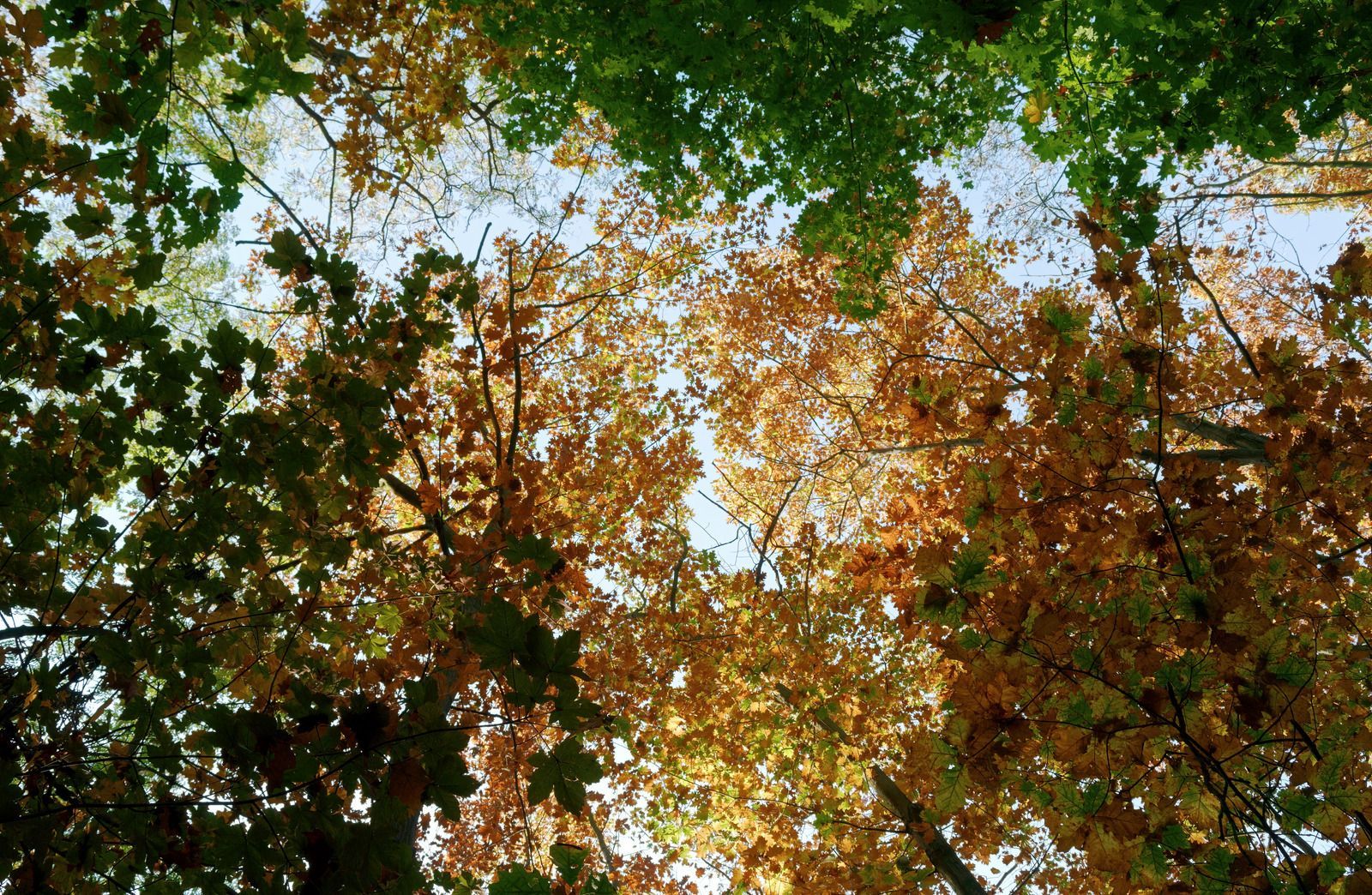
Texas red oak, Shumard oak, and blackjack oak belong to this group, and they are hit the hardest. Leaves turn pale green or bronze, starting at the tips and edges, and the change can sweep through the crown in a matter of days. A red oak that is dying of oak wilt can show bright, almost autumn colors in the middle of summer. Many die within three to four weeks of the first symptoms.
Post Oaks And Other White Oaks
Post oak, bur oak, and chinkapin oak resist the disease better, and they rarely die from it. That does not make them immune. A post oak in the Fort Worth area was lab confirmed with oak wilt earlier this year, a good reminder that a single bad leaf season on a post oak should not be waved off automatically.
Warning Signs Beyond the Leaves
The leaves are only part of the picture. When you suspect oak wilt, look at the whole tree and the whole yard.
Early Leaf Drop
An oak that normally holds its leaves until the fall is shedding them in July or August, and the leaves on the ground are brown at the edges or discolored along the veins.
Dieback From The Top
Dead branches or bare patches appear in the upper canopy first, then move downward. Drought tends to stress the lower and outer parts of a tree differently, so the direction of the decline is a clue.
A Neighbor Tree That Died Last Year
Oak wilt moves through connected roots, so a dead oak within fifty to a hundred feet of your tree is a significant warning.
Recent Wounds
If the symptoms began within a few weeks of pruning, storm damage, or construction that scraped the trunk or roots, the fresh wound may have been the doorway.
A Sudden, Fast Pace
Ordinary stress usually builds over a season. Oak wilt can take a tree from looking mostly fine to mostly dead in weeks.
Look Alikes That Fool Homeowners
Several other problems brown the edges of oak leaves, and most of them are far less serious. Ruling them out is a big part of what an arborist does.
Drought Scorch
A long dry stretch in the rocky clay soils around Weatherford, Aledo, and Granbury can scorch leaf margins and cause early leaf drop. The browning is usually even across the crown and often worst on the side facing afternoon sun. The veins stay green in the early stages.
Bacterial Leaf Scorch
This disease also burns the margins, but it tends to be uniform across a leaf and builds slowly over several years rather than collapsing a tree in weeks.
Anthracnose
This fungal leaf disease distorts new growth after cool, wet springs. It looks alarming and seldom threatens the tree.
Hypoxylon Canker
This one shows up as gray or silvery crusts on the bark of an oak that is already declining from other stress, usually drought. It is a sign that the tree was weak before you noticed.
TIP: Take a photo of a fallen leaf and a photo of the canopy from the same spot every week for a month. Put a coin or a ruler next to the leaf. A dated record of how fast the browning moves, and which limbs it starts on, tells an arborist more than a single visit does.
How Oak Wilt Moves From Tree to Tree
Understanding how it spreads explains why speed matters.
Through The Roots
Live oaks growing near each other usually have roots that have grafted together underground. The fungus passes through those connections from an infected tree into its neighbors. In Texas live oak stands, an infection center commonly expands outward by roughly seventy five feet a year. That is how a single browning tree turns into a dying grove.
Through Beetles
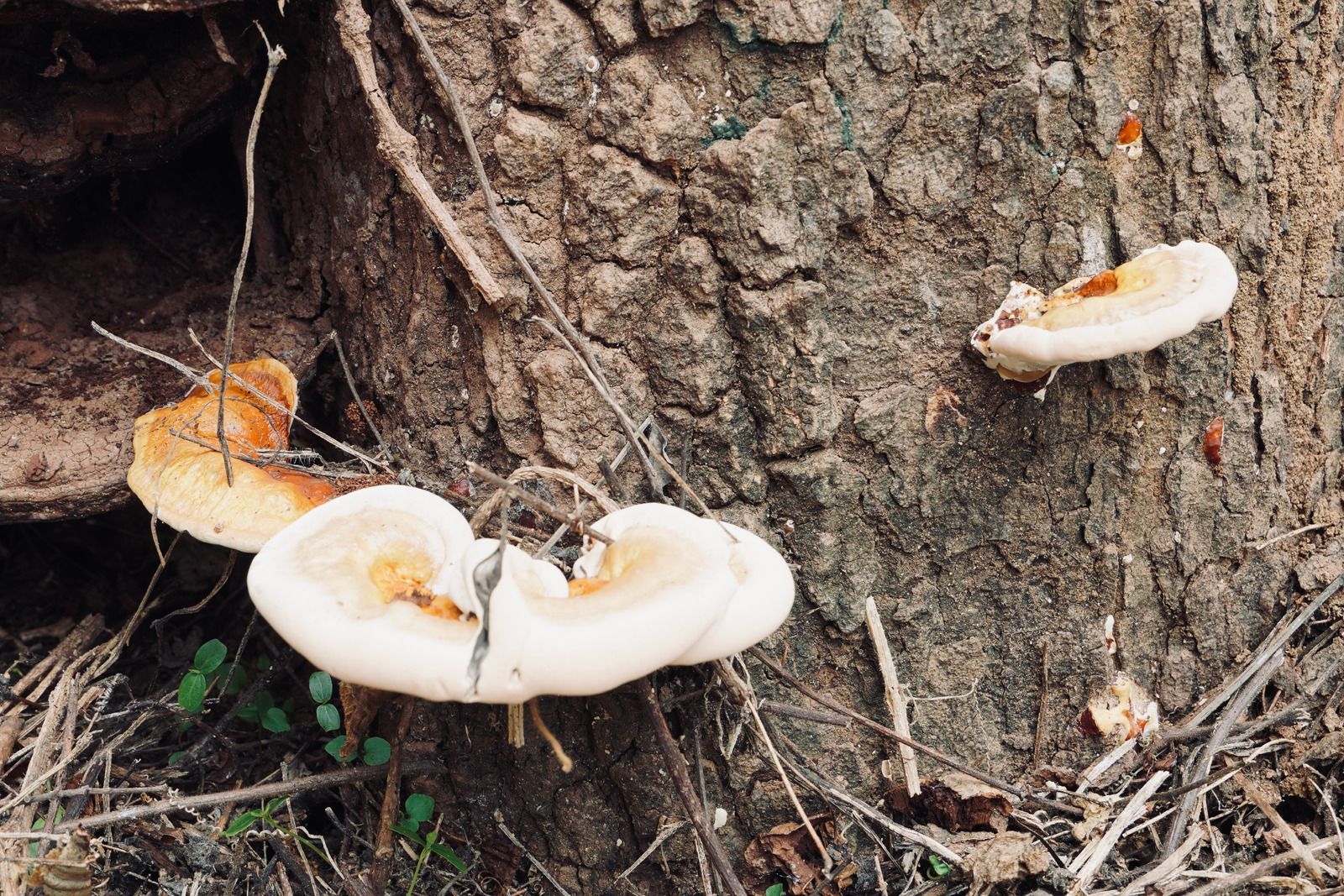
Red oaks that die of oak wilt can grow spore mats under the bark, mostly the following spring. The mats give off a fruity smell that draws small sap feeding beetles. The beetles then visit fresh wounds on healthy oaks and carry the fungus with them. A pruning cut or a broken limb in the wrong month is all it takes.
Through Firewood
Wood cut from a diseased red oak can carry spore mats, which is why moving or stacking it near healthy oaks is a bad idea.
What to Do the Day You Notice Browning Edges
You do not need to panic, but you do need to be deliberate. A calm response protects the tree.
Leave The Saw In The Garage
Do not prune the affected limbs, even if they look dead. A fresh cut on an oak during the wrong season is the single easiest way to give the fungus a new entry point, and an infected tree can be the source of beetle visits.
Keep The Area Clean
Do not drag brush, firewood, or limbs from a suspect oak across the yard or to another property.
Map The Problem
Walk the area and note any other oaks showing browning, thinning, or early leaf drop, along with any oaks that died in the past two years. Mark them on a rough sketch.
Hold Off On Guessing
Symptoms and spore mats are strong indicators, but laboratory testing of fresh wood samples is what confirms oak wilt. An arborist can collect the right kind of sample and send it to the plant disease lab in College Station.
Get The Tree Looked At Promptly
The window to protect healthy neighbors is narrow, and the answer you get from an inspection decides every step that follows.
What Happens If the Tree Tests Positive
A positive result is not the end of the story. The right response depends on the kind of oak.
For A Red Oak, The Tree Is Almost Always Lost
The priority is to keep it from becoming a spore factory. An infected red oak that dies in late summer or fall should be removed promptly, and the wood handled so that it does not produce spore mats near healthy oaks. Drying or properly managing the wood before spring is part of the plan.
For Live Oaks, There Are More Options
The most reliable way to protect nearby trees is to cut the root connections with a trench at least four feet deep, placed well beyond the trees that show symptoms, often a hundred feet or more. Healthy trees inside that barrier are usually removed, and the untreated trees outside it are watched for several years. A preventive fungicide injection by a licensed applicator can protect individual high value live oaks that are not yet infected. It works best before symptoms appear, and trees with more than about thirty percent of the crown showing symptoms rarely respond.
For A Tree That Is Too Far Gone, Removal Is The Safe Option
A dead oak drops limbs without warning, and one in a storm can come down on a house or driveway. Planned removal, in the right season and with the right handling of the wood, is safer than waiting.
Protecting Healthy Oaks Going Forward
Once you have lived through a scare like this, a few habits go a long way.
Prune In The Right Window
The accepted guidance is to avoid wounding oaks from about February through June, when beetle activity and infection risk are highest. The safer times are the coldest weeks of midwinter and the hot stretch of mid to late summer, and every cut or wound should be sealed with tree wound paint right away, no matter the season. Fall and winter storm damage should be cleaned up and sealed the same way.
WARNING: Do not store or burn firewood cut from a suspect red oak near healthy oaks, and do not carry it to another property. Spore mats can form on logs and stumps, and moving the wood can start a new infection center miles from the original tree.
Protect Roots
Trenching for utilities, grade changes, and heavy equipment can damage roots, and each damaged root is another wound. Keep equipment off the root zone of your best oaks.
Water Through Dry Spells
A healthy, well watered oak handles stress better. Deep, slow watering during long dry stretches keeps the tree stronger, though it does not make it immune to oak wilt.
Check The Oaks Every Month In Summer
A short walk with your phone camera is enough. The earlier a change is noticed, the more choices you have.
Frequently Asked Questions
Can an oak tree recover from oak wilt?
Red oaks almost never recover once symptoms appear. Live oaks sometimes survive when caught early, with root connections cut and preventive fungicide applied. Trees with large portions of the crown affected rarely respond.
How can I tell oak wilt from drought stress?
Drought browning spreads evenly and slowly, with veins staying green early. Oak wilt often starts on upper branches, shows browning veins or bronze edges, and moves fast. Only a lab test confirms which one.
When is it safe to prune an oak in North Texas?
Avoid pruning from about February through June, when disease risk peaks. The safer windows are the coldest winter weeks and the hot middle of summer. Seal every cut immediately, whatever the season.
Do post oaks get oak wilt?
They are affected less often and rarely die from it, though confirmed cases exist around Fort Worth. Sudden dieback on a post oak deserves examination, since drought and root stress are more common causes.
Should I cut down an oak that might have oak wilt?
Not before testing. Cutting an oak at the wrong time can spread the disease, and the wood requires careful handling. An inspection first ensures any removal is planned around timing and proper wood disposal.
How far can oak wilt travel underground?
Through connected live oak roots, an infection center can expand roughly seventy five feet a year. Red oak root spread is slower and shorter, but beetles can carry the fungus much farther.
Reading the Leaves Before Oak Wilt Spreads
Browning leaf edges in midsummer do not always mean oak wilt, but they deserve a closer look. Yellow veins turning brown on a live oak, bronze margins on a red oak, early leaf drop, and dieback moving down from the top all point toward a problem worth testing. Leaving the saw in the garage, keeping limbs and firewood in place, and photographing the changes each week give the tree and its neighbors the best possible start toward a clear answer.
A lab confirmed diagnosis shapes every decision that follows, from root trenching and preventive treatment for live oaks to careful removal of infected red oaks. Deadwood Services
has spent more than 8
years caring for trees in Weatherford, TX, where rocky clay soils and long dry summers already test every oak. With prompt attention and pruning saved for the safer seasons, the older trees that give a property its character can keep standing for many years to come.