
Mushrooms or Conks at the Base of a Tree? What Root Rot Means
September 26, 2026
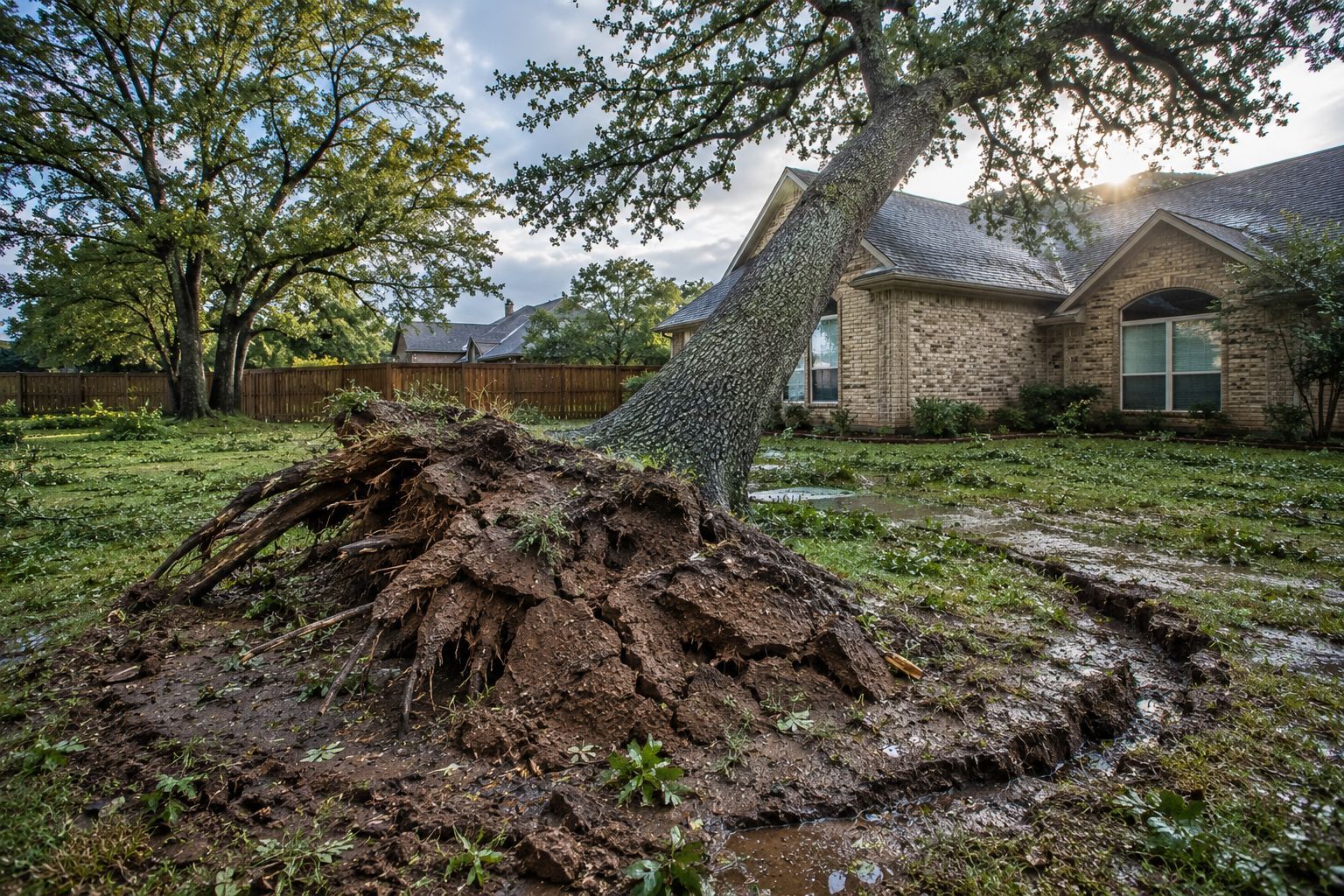
WARNING: Never push on, prune, or stand under a leaning tree with cracked soil or lifted roots on one side. It can drop with almost no warning, and getting close to inspect it is how people get hurt. Have it checked from a safe distance.
WARNING: Never push on, prune, or stand under a leaning tree with cracked soil or lifted roots on one side. It can drop with almost no warning, and getting close to inspect it is how people get hurt. Have it checked from a safe distance.
Quick Answer: Mushrooms or hard, shelf-like conks growing at the base of a tree almost always mean a fungus is breaking down wood somewhere inside the trunk or root system. That doesn't guarantee the tree is coming down tomorrow, but it does mean the tree's structural strength is already compromised in ways you can't see from the outside. The safe move is to treat it as a root-stability question, not a cosmetic one, and get the base and root flare looked at before you decide whether the tree stays or goes.
You're out walking the yard one morning, coffee in hand, and there they are — a cluster of mushrooms pushed up through the mulch right against the trunk of the big oak you've had since you moved in. Or maybe it's not mushrooms at all, but something tougher and shelf-shaped, layered like a stack of pancakes, growing flat against the bark a foot or so off the ground. Either way, your first thought is probably some version of "is this normal, or is this a problem?"
For a tree that's otherwise green, full, and seemingly healthy up top, growths at the base are easy to write off. A lot of homeowners mow around them for a season or two before anything else changes. The trouble is that by the time you can see fungus fruiting at ground level, the decay it represents has usually been working inside the tree for years. What you're looking at isn't the disease itself — it's the proof that a disease process is already underway below the surface, in the part of the tree that keeps it standing.
What You're Actually Looking At
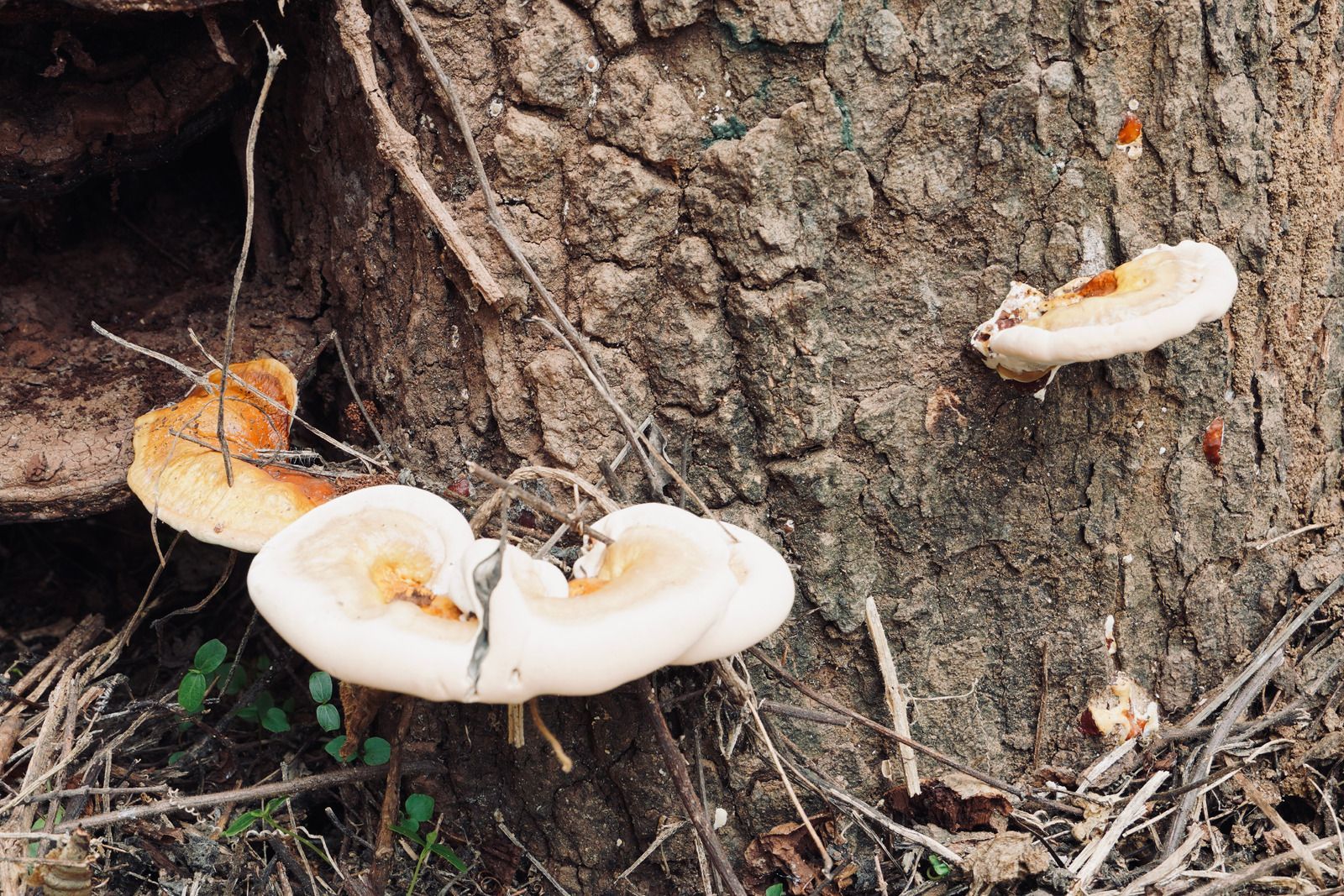
Not all growths at the base of a tree mean the same thing, and it helps to know the difference before you decide how urgent the situation is. Soft, fleshy mushrooms — the kind with a cap and stem that pop up after rain and can rot away within days — are usually the short-lived fruiting stage of a fungus that's living permanently inside the wood or root system. They come and go, but the organism producing them doesn't.
Conks are a different animal. These are the hard, woody, shelf-like brackets that grow flat against bark, often stacked in layers, and can persist on a tree for months or years without breaking down. A conk is generally a sign of a longer-established decay column inside the trunk or a major root, because it takes a mature fungal colony to produce a structure that durable. If you see the same conk in the same spot year after year, growing a little larger each season, that's evidence of decay that has had real time to spread.
Both types are decomposer fungi. Their job, biologically speaking, is to break down wood fiber. When that wood fiber happens to be the structural core of a tree that's still standing and still expected to hold its own weight in a windstorm, "decomposing" and "load-bearing" end up on a collision course. The fungus wins that one every time.
Why Fungi Take Hold at the Base in the First Place
Healthy, undamaged wood resists fungal colonization reasonably well. Decay fungi typically need an entry point — a wound, a pruning cut that never sealed properly, storm damage to a root, soil compaction that stressed the root system, or old construction injury from years back that scarred the root flare. Once a fungus gets into that opening, it can spread quietly through root tissue and up into the base of the trunk long before any external symptom shows up in the canopy.
This is part of why root and butt rot is so deceptive. The crown can look full and green for years while the fungus works through the structural wood below, because leaves depend on a functioning vascular system, not on trunk strength. A tree can be actively losing its foundation while still leafing out normally every spring.
Property history matters here more than people expect. A tree that's had its root zone disturbed — even once, even years ago — carries that vulnerability indefinitely. Around Parker County, where rocky clay soils already limit how far and how deep root systems can spread, any additional root stress from drought cycles, grade work, or nearby digging tends to show up later as exactly this kind of base decay.
TIP: If you notice fungus at the base of a tree that also had root damage from recent construction, trenching, grade changes, or heavy equipment traffic nearby, treat that as a higher-priority combination. Root injury is one of the most common entry points for the fungi that cause this kind of decay.
The Fungi Most Likely Behind It
Two fungal culprits account for a large share of the root and butt rot found on mature trees in this part of Texas, and they behave differently enough that it's worth knowing which one you might be dealing with.
One produces clusters of honey-colored mushrooms at the base of the trunk, often in groups of several to dozens after a wet stretch. This fungus is aggressive — it doesn't just wait around for wood that's already dying, it actively attacks the living tissue that generates bark and wood in the roots, then spreads up into the trunk base. Left unmanaged, it's associated with a meaningful share of unexplained tree deaths nationally, and it produces a white, stringy rot that noticeably weakens wood strength right where the tree needs it most.
The other shows up as those harder, perennial shelf conks rather than soft mushrooms, and it tends to cause a white, mottled rot that can extend well up into the trunk and outward through the major roots — sometimes ten feet or more from where the conk is actually growing. Trees fighting this one often show secondary symptoms above ground: undersized or yellowing leaves, dead branches scattered through the canopy, and slower growth than neighboring trees, even while the tree is still clearly alive.
Neither problem responds to home remedies. Removing the visible mushroom or conk doesn't touch the fungal network already living in the wood — that's like picking an apple and calling the tree cured.
Reading the Rest of the Tree
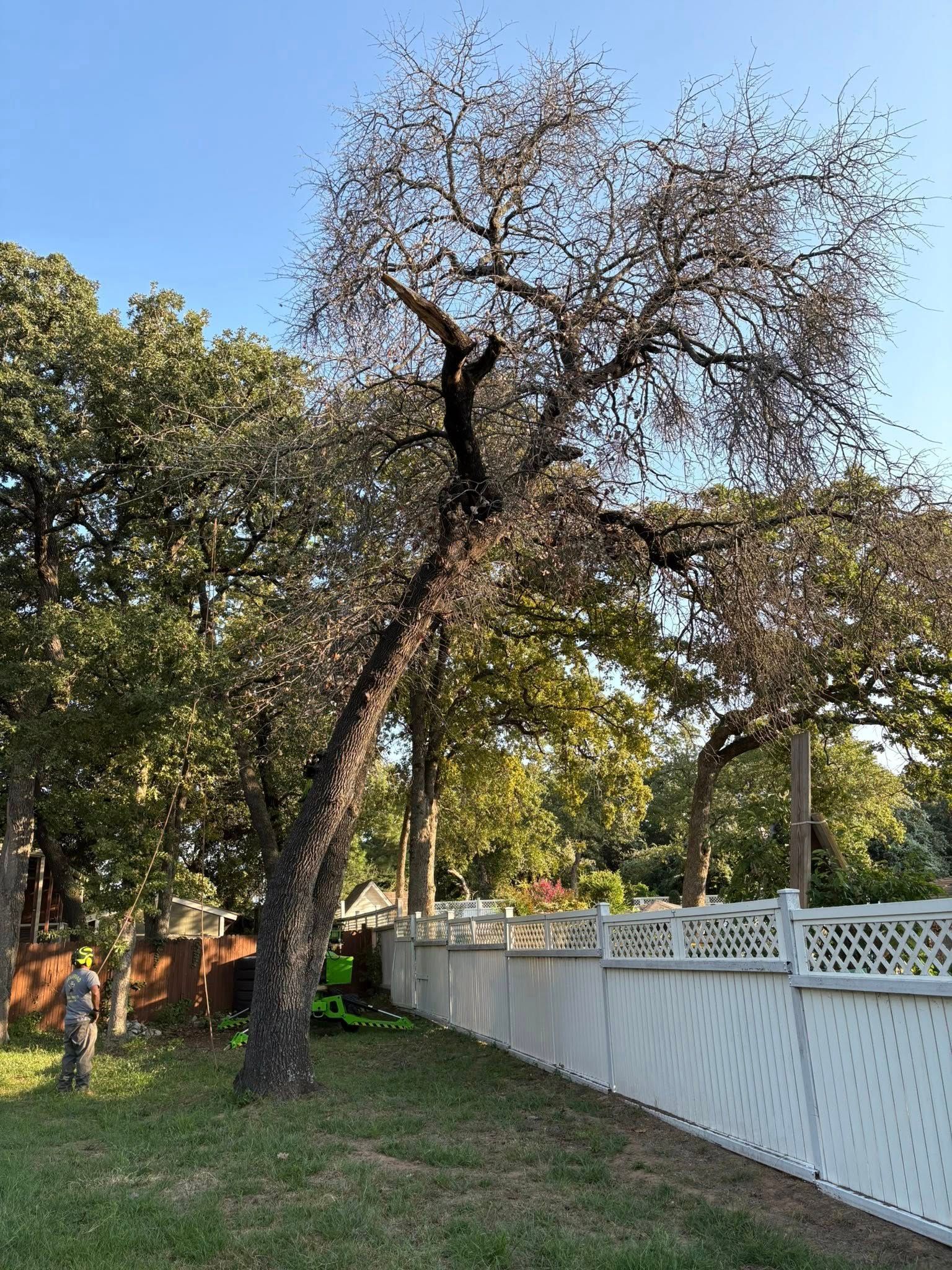
Fungus at the base is rarely the only clue, if you know where else to look. Thinning in the upper canopy, branches that die back from the tips inward, a trunk that leans more than it used to, or bark that's splitting or sloughing off near the ground can all point toward the same underlying decay. Soil that's heaving or cracking in a ring around the base — sometimes described as the ground "lifting" slightly during wind — is one of the more serious signs, because it suggests the root plate itself is starting to shift.
No single sign proves failure is coming. Plenty of trees carry some internal decay for years without dropping. But stack two or three of these together — fungus at the base, canopy dieback, a hint of root-plate movement — and you've moved past "keep an eye on it." That combination calls for a hands-on look, soon.
WARNING: A tree showing canopy dieback combined with a new lean, root-area mushrooms, or trunk cracks should not be climbed, pruned, or handled without a professional assessment first. These combinations are exactly the conditions that lead to unpredictable, whole-tree failure rather than a single branch coming down.
What a Root Rot Evaluation Actually Involves
A proper look at a tree showing base fungus goes well beyond a glance at the mushrooms. It typically starts with clearing mulch, leaf litter, or turf away from the root flare so the actual base of the trunk and the visible roots can be examined directly, since decay is often worse than it appears when soil or debris is covering part of the trunk. From there, sounding the trunk — tapping along the base and lower trunk to listen for the dull, hollow response that indicates internal decay versus the solid response of healthy wood — helps map roughly how far the rot has spread.
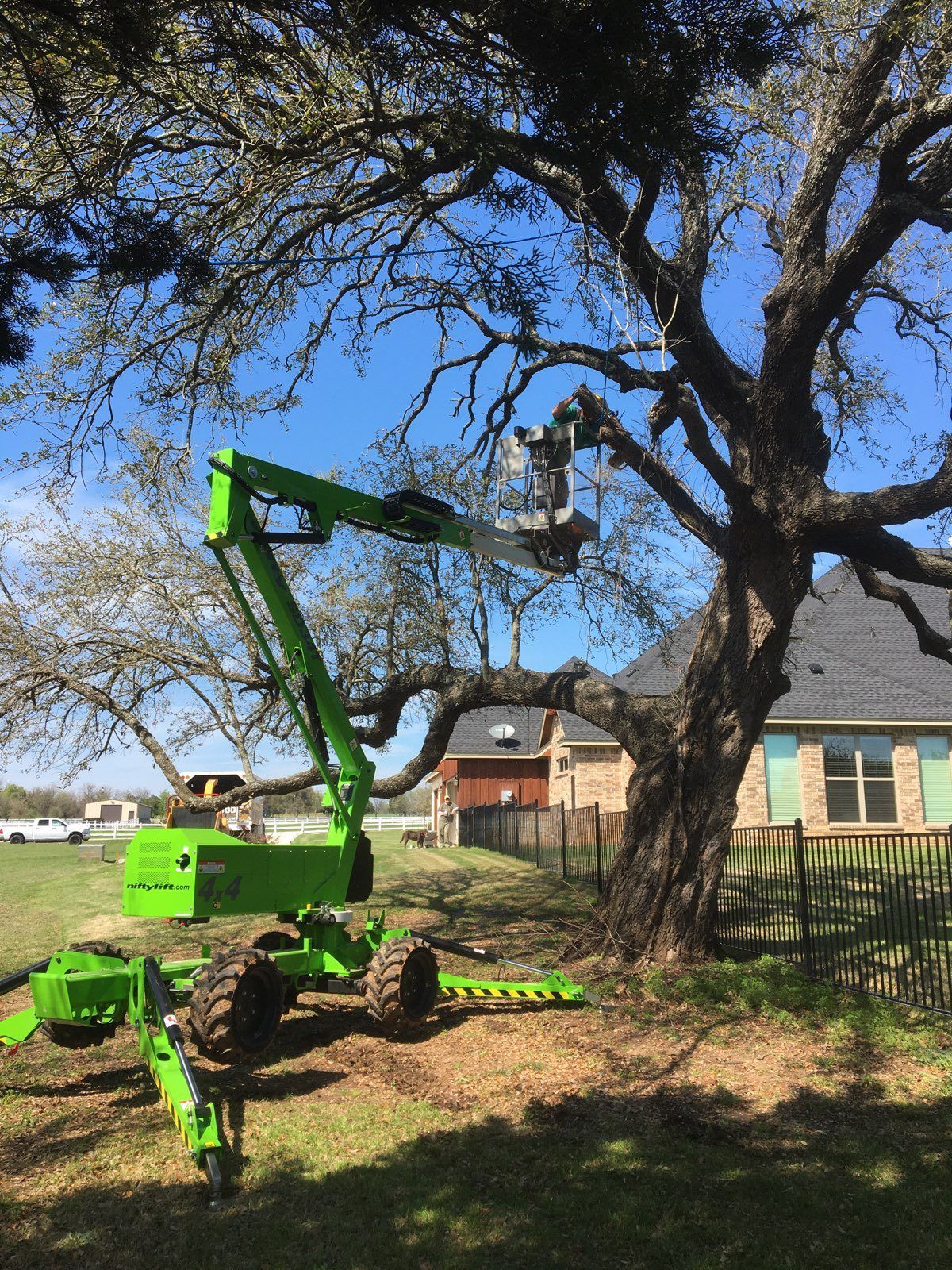
Checking for cavities, checking bark for movement or looseness, and evaluating whether the tree shows any lean or root-plate shift rounds out the picture. In some cases, that assessment is enough to determine that a tree needs to come down. In others, decay is limited enough, and located far enough from primary structural roots, that the tree can be monitored or managed rather than removed outright. The point of a real evaluation is telling those two situations apart, rather than guessing based on how alarming the mushrooms look.
What Not to Do When You Spot Fungus at the Base
The instinct to mow it down, spray it, or just ignore it until next season is understandable, but none of those responses address the actual problem. Fungicide treatments aimed at fruiting bodies don't reach the decay already established inside the wood. Mowing over mushrooms just knocks down the visible evidence while the fungal network underneath keeps working. And waiting through another growing season to "see if it gets worse" mostly just gives the decay more time to spread through root tissue you can't inspect without digging.
The other mistake worth avoiding is assuming a tree is fine simply because it still has leaves. Root and butt rot fungi can take years to visibly affect canopy density, which means "the tree still looks healthy" and "the
tree's root system is structurally sound" are two completely different claims. One is easy to see from your porch. The other requires actually looking at what's happening at ground level.
Frequently Asked Questions
Does every mushroom near a tree mean the tree has root rot?
Not necessarily. Some mushrooms simply decompose old mulch, buried roots, or nearby organic debris. Growth attached directly to the trunk, root flare, or a visible root signals a real connection to the tree.
Can a tree survive root rot if it's caught early?
Some trees survive for years with limited, contained decay, especially when affected roots are a small share of the whole system. A hands-on evaluation determines how much damage already exists.
Is it safe to remove the mushrooms myself and keep watching the tree?
Removing mushrooms won't worsen the decay, but it won't slow it either. It's a cosmetic step, not a management one, and shouldn't be mistaken for an actual solution to the problem.
Why do these fungi seem to show up more after wet weather?
Mushrooms are the reproductive structures of fungi, fruiting in response to moisture and temperature. A dry stretch followed by rain often triggers a flush, even from colonies established long ago.
Does root rot affect oak wilt risk in North Texas?
Different organisms cause each problem, so one doesn't directly lead to the other. Still, a tree weakened by root decay has less capacity to withstand additional stress from other regional threats.
How can I tell if the fungus is affecting a major structural root versus a minor one?
It's hard to judge from the surface alone without excavation. Major structural roots typically radiate toward the tree's heaviest or most wind-exposed side, making fungus there a higher priority.
If the tree needs to come down, is that riskier than a normal removal?
Compromised root systems require different handling than a routine removal, since the base itself may be unstable to work around safely. That's why assessment happens before any cutting begins.
Should I be worried about other trees nearby?
Some root rot fungi spread through root contact between neighboring trees. If several trees grow close together and one shows base decay, checking the surrounding trees is worth doing too.
Knowing When a Tree Needs a Second Look
A mushroom or conk at the base of a tree is rarely the full story, but it's never nothing either. It's the visible edge of a process that started underground, sometimes years before it ever broke the surface. The trunk can stay green, the canopy can stay full, and the roots can still be losing their grip the entire time. That gap between what a tree shows and what it's actually holding onto is exactly why base fungus deserves more than a passing glance.
Deadwood Services
has spent 8
years reading these signs on properties throughout Weatherford, TX, and the pattern holds steady across almost every yard. Trees rarely announce root failure clearly, so the growths at the base end up doing the talking instead, long before anything changes in the canopy above. Paying attention to what they're saying, rather than hoping they'll disappear on their own, tends to be the difference between catching a problem early and finding out about it the hard way, on a day you didn't choose.