
Cracks or a Split in the Trunk After Wind? When It Has to Come Down
October 31, 2026
WARNING: Never push on, prune, or stand under a leaning tree with cracked soil or lifted roots on one side. It can drop with almost no warning, and getting close to inspect it is how people get hurt. Have it checked from a safe distance.
WARNING: Never push on, prune, or stand under a leaning tree with cracked soil or lifted roots on one side. It can drop with almost no warning, and getting close to inspect it is how people get hurt. Have it checked from a safe distance.
Quick Answer: A crack in a trunk after wind is not automatically a death sentence, but it is never something to ignore. Shallow bark splits that follow the grain and stay tight often heal on their own. A tree has to come down when the crack runs deep, opens wider over time, crosses the grain, splits a fork apart, or sits on a trunk that is already decayed and hollow, especially if the tree stands over a house, driveway, or play area. Keep people and vehicles out from under it, photograph the crack, and have an arborist measure it before the next storm.
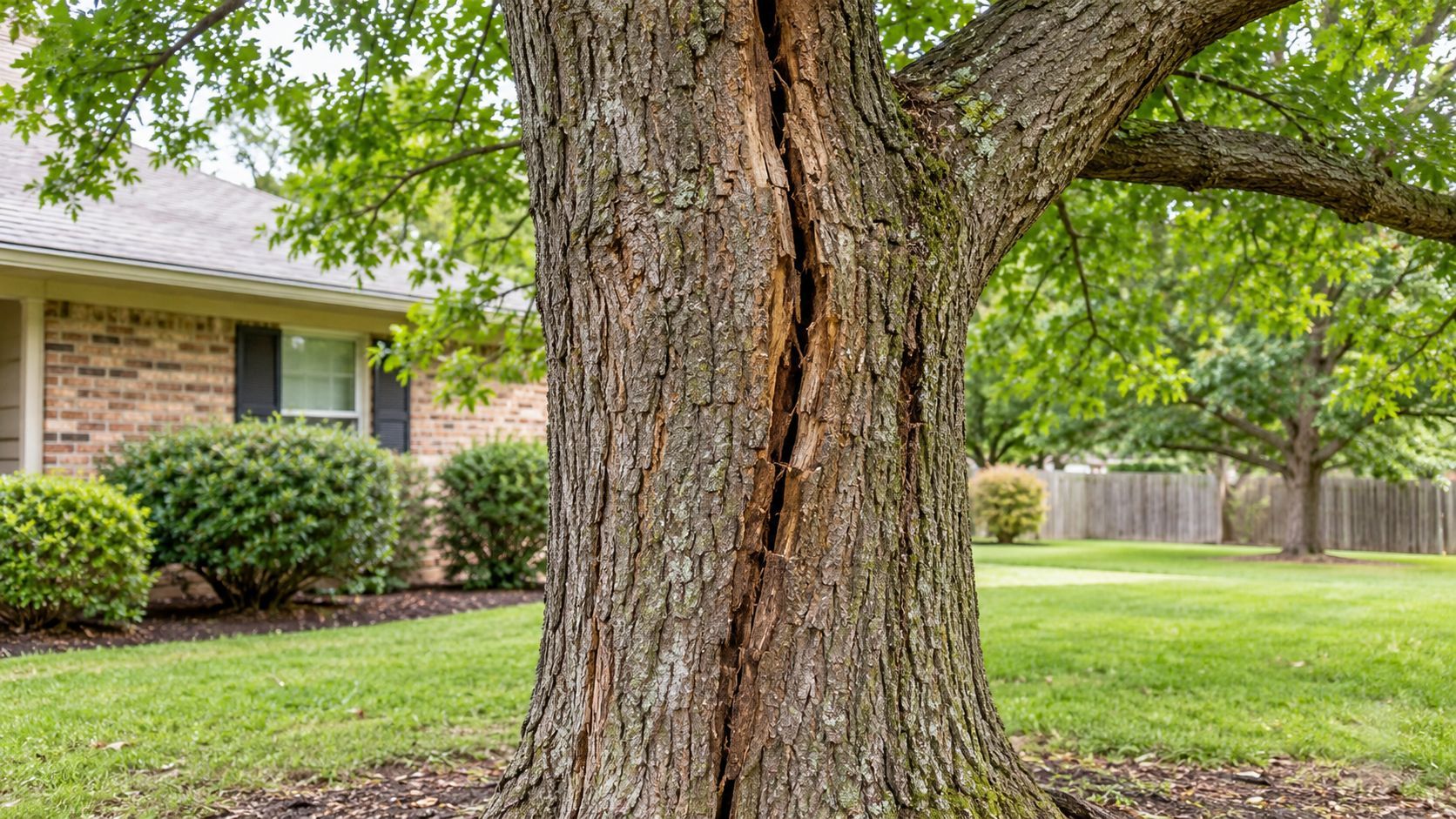
The wind finally quit around midnight. You waited until daylight to walk the yard with a flashlight and a cup of coffee, checking the fence, the shed, and the big tree by the back porch. Everything looked fine from the patio. Then you stepped around to the shaded side of the trunk and saw it: a dark line running up the bark, long enough that you can't see where it ends, with a gap you could slide a pencil into.
Your first questions are probably the same ones every homeowner asks. Is it going to fall? Can it be saved? How long do I have? Those are the right questions, and the honest answer is that it depends on what kind of crack you are looking at. Some cracks are surface wounds that a healthy tree seals over in a few seasons. Others are the visible edge of a structural failure that is already in progress. Telling them apart is what this article is about.
Why Wind Cracks Trunks in the First Place
Wood is strong along the grain and weaker across it. A trunk acts like a bundle of long fibers held together by lignin, and when wind pushes the crown back and forth, the trunk bends like a spring. A sound tree flexes and recovers. A tree with a hidden weak point, such as decay, a poorly healed wound, or a tight fork, concentrates all that bending force at the weakest spot, and that is where the fibers separate.
North Texas gives trees plenty of chances to find those weak spots. Spring brings straight line winds and fast moving storm cells off the plains. Long dry stretches stress root systems and make wood brittle, then a saturated week softens the soil right before a gust arrives. Add the occasional hard freeze, like the deep cold snap that split bark on so many live oaks and pecans across Parker County, and a lot of trees carry old injuries they have never fully closed. Wind simply finishes the job that drought, cold, and time started.
Not every crack starts with the wind. Rapid growth after a wet spell, sudden temperature swings, old lightning strikes, and past pruning wounds can all leave a seam in the bark. The storm often just makes it visible, or pushes an existing seam wider.
The Four Kinds of Cracks You Need to Know
Before you decide anything, identify what you are looking at. Arborists generally sort trunk cracks by direction and depth.
Ribbed Vertical Cracks
These raised, ridged scars form as trees attempt to seal wounds that repeatedly reopen during trunk movement or freezing. They indicate longstanding stress and weakness.
Shear Cracks
Deep vertical splits allow trunk sections to move independently during wind. This serious defect compromises structural integrity and increases the risk of trunk failure.
Horizontal Cracks
These cracks cross the grain, often beneath leaning or heavily loaded stems. They may signal imminent trunk or limb failure and require urgent assessment.
Cracks at a Fork
Included bark trapped between competing stems prevents strong wood connections from forming. Wind pressure can split the weak union, potentially separating major sections of the crown.
Signs That Point Toward Removal
No single measurement settles the question, but certain combinations push the decision clearly toward taking the tree down. When we assess a cracked trunk, these are the things we check.
The Crack Is Deep
Deep probes or visible daylight through the trunk indicate separated wood, suggesting serious structural damage beyond superficial bark splitting.
The Crack Moves
Shifting crack edges or increasing width indicate active failure. Mark endpoints and measure regularly to track changes.
There Is Decay Behind It
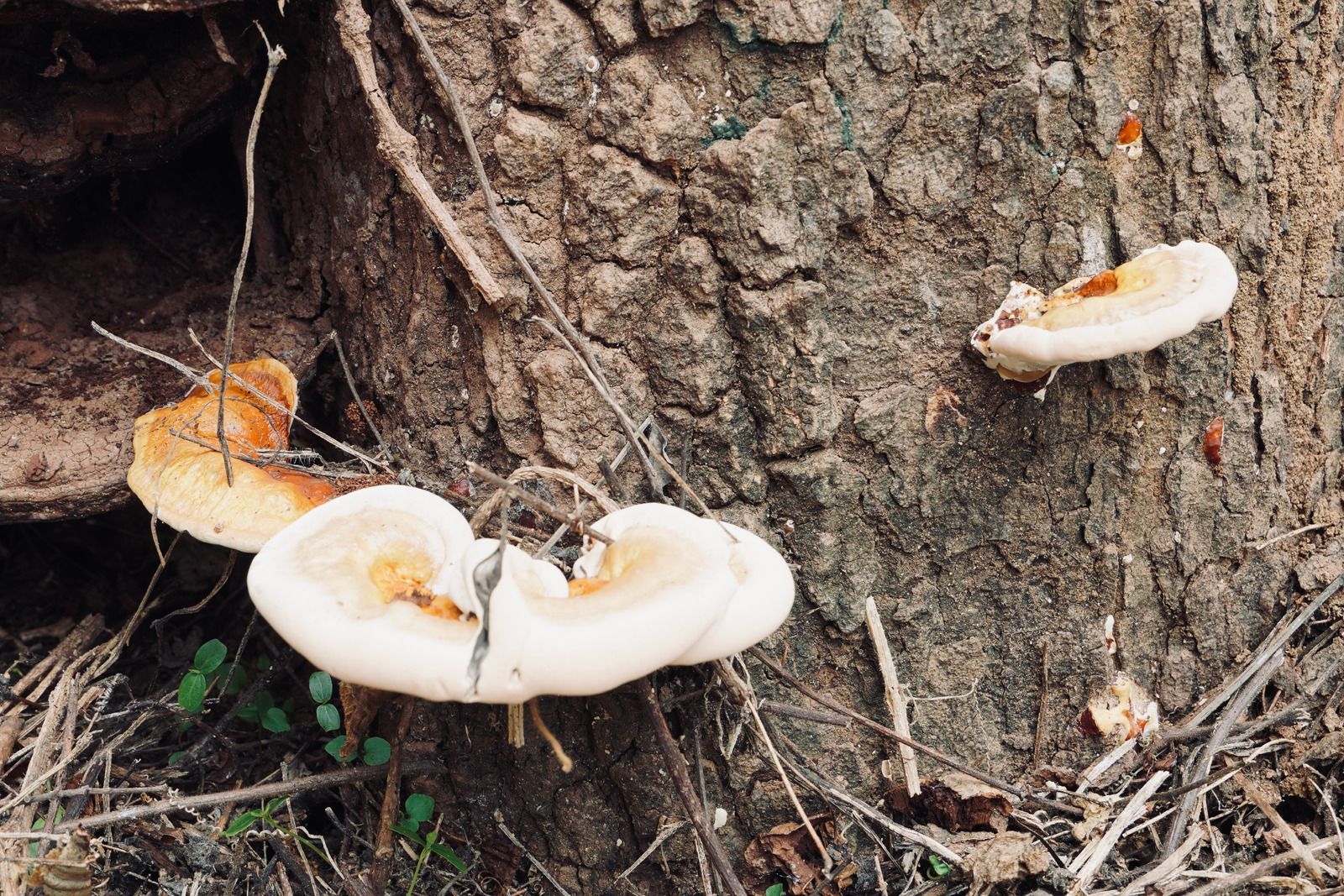
Fungi, hollow sounds, dark seepage, or missing bark suggest internal decay that weakens the trunk's structural strength.
The Crack Goes With a Lean or Heave
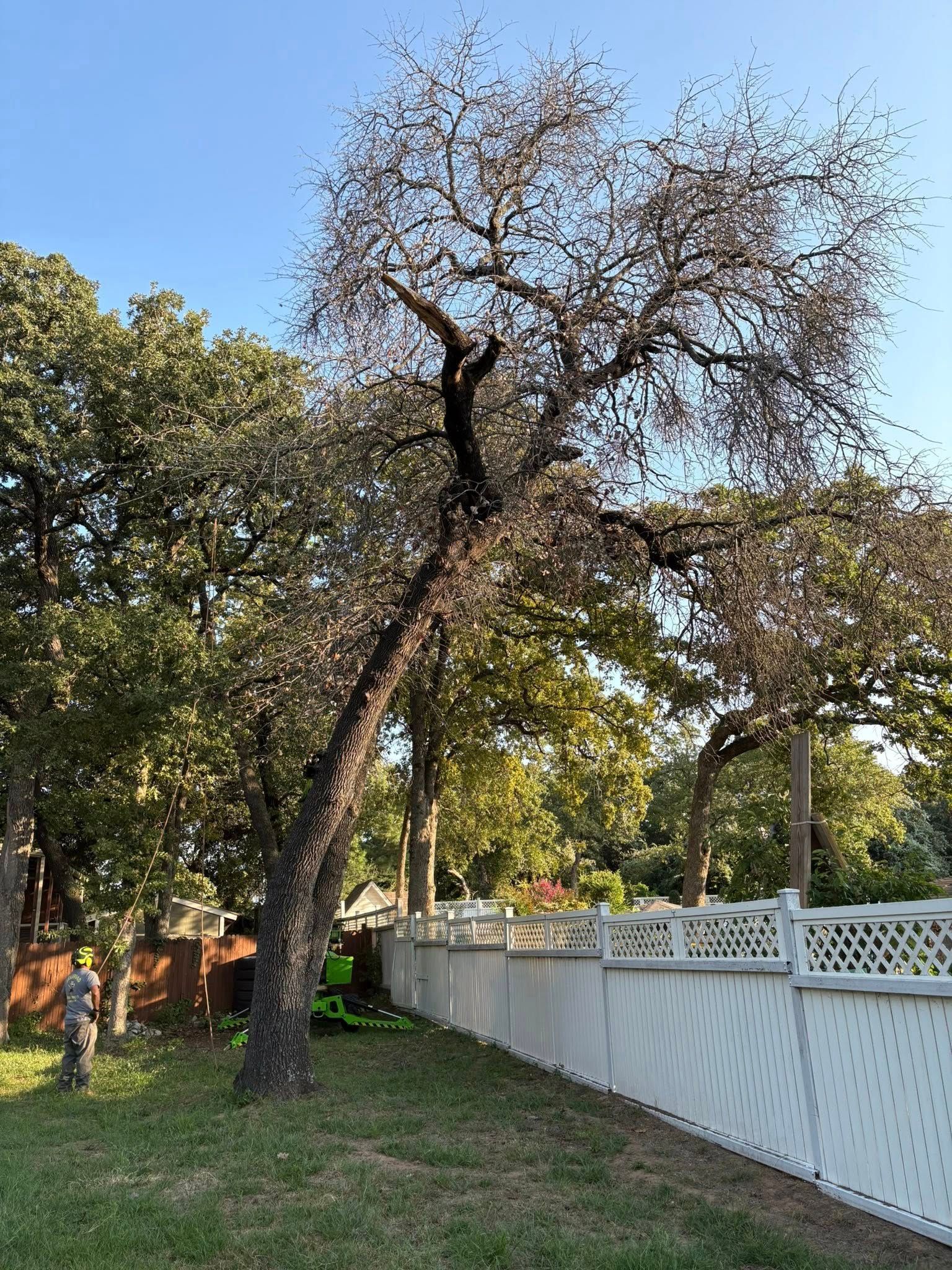
A leaning trunk or raised, cracked soil may indicate root instability alongside trunk damage, increasing the likelihood of failure.
The Crack Crosses the Grain
Horizontal cracks or sideways turning splits indicate tearing wood fibers, suggesting structural failure rather than simple separation along existing seams.
The Tree Has a Target
A cracked tree above bedrooms, driveways, or play areas poses greater risk because failure could injure people or damage property.
TIP: Take photos of the crack from the same spot with a ruler or a dollar bill in the frame, and repeat them after every wind event. A dated series of pictures shows an arborist how fast the crack is changing, which is often more useful than a single visit.
Signs a Cracked Tree May Be Worth Saving
Plenty of cracked trees do not need to come down. University extension specialists note that most trees with shallow trunk cracks recover well, because a healthy tree builds callus tissue and chemical barriers that seal the wound and wall off decay. A few signs lean in the tree's favor.
The crack is shallow and follows the grain. The edges stay tight and do not move in the wind. The wood you can see inside is clean and firm, not dark, soft, or crumbly. The canopy is full and the leaves are a normal color for the species. There is no lean, no fungal growth, and no hollow sound when you tap around the area.
Trees with a weak fork that has not yet split can sometimes be supported with cabling and bracing. Steel cables placed high in the crown share the load between the two stems, so wind pulls on the cable instead of the weak union. This is a good option for a healthy, valuable tree with a sound trunk and a tight but flawed fork. It is not a repair for a trunk that has already split deeply or that shows decay, and it needs inspection every year or two to confirm the hardware is still doing its job.
Selective crown thinning or reduction can also help. Removing a portion of the crown's sail area lowers the force the wind can put on a damaged trunk, which buys time for healing. Done correctly, it takes the weight off the weak point without butchering the tree.
Species and Local Conditions That Raise the Stakes
Some trees common around Weatherford, Aledo, and Granbury are more prone to trunk splitting than others. Live oaks often develop wide, heavy, horizontal limbs and forks that carry enormous weight at the end of a long lever arm. Pecans and cottonwoods have brittle wood and are known for splitting at the crotch. Cedar elms and hackberries commonly grow tight, included forks that look fine for years and then separate in one gust. Mesquite can develop multiple trunks from the base with bark trapped between them.
Parker County's rocky clay soil adds another factor. Roots cannot spread as deep as they would in loose ground, so many trees depend on a wide, shallow root plate. When that plate is already stressed by drought, trenching, or construction, a trunk crack is a second sign that the whole tree is under strain.
Oaks need special care. If the cracked tree is an oak, and especially a live oak, keep in mind that fresh wounds are an invitation for oak wilt in warm months. Talk with an arborist about the timing of any pruning or removal before a saw touches the tree.
What to Do in the First 24 Hours
You do not need to act in a panic, but you should act. Start by keeping people, pets, and vehicles out from under the tree and away from the side the crack faces. Park elsewhere until it has been checked. Take your photographs. Note the species, the length of the crack, and whether you hear creaking or see movement.
Then call someone who can look at the tree in person, because cracks are hard to judge from a photograph. A qualified arborist can tap the trunk for hollow areas, measure the thickness of the remaining sound wood, check the root zone and the soil around the base, and tell you whether the tree is a candidate for support or for removal.
Do not try to pull the crack closed. Wrapping a chain or ratchet strap around the trunk, driving bolts through it, or filling the gap with sealant or wound paint can trap moisture and speed decay, and an improperly placed chain can actually girdle the tree as it grows. Wound dressings do not help a tree heal, so leave the crack alone until it has been evaluated.
WARNING: If the crack is wide, if you can hear the trunk creaking in the wind, or if the tree is leaning toward a structure, stay clear and treat it as an emergency. A trunk that is actively splitting can fail without further warning, and the safest tree removal is the one done before the next storm.
What a Removal Looks Like When It Has to Come Down
A split trunk is under tension, which makes it unpredictable to cut. Wood that appears solid can release suddenly, and a crack can run farther the moment a saw or a rope puts load on the tree. That is why this kind of job is done in controlled sections, with the crew choosing where each piece goes, rigging heavy sections down on ropes, and cutting from positions that keep them clear of the pinch points. Climbing a cracked tree to cut it is a decision that belongs to trained crews, not a weekend project with a ladder.
After the tree is down, stump grinding takes the base below ground level so you can replant or reclaim the space. If the cracked tree was one of several that took damage, your arborist can also review the other trees on the lot, since a storm that split one trunk may have stressed its neighbors.
Frequently Asked Questions
Can a tree with a split trunk survive?
Sometimes. A shallow crack in a healthy tree often closes with new growth. Deep shear cracks, splits through the center, or decay behind the crack usually mean failure rather than healing.
How long can I wait before getting a cracked tree checked?
Do not wait for the next storm. Wide, moving, or house adjacent cracks need immediate attention, and even narrow seams deserve inspection within days since depth is hidden.
Is a vertical crack worse than a horizontal one?
Both matter, but horizontal cracks cut across wood fibers and often appear shortly before failure. Deep vertical shear cracks passing through the trunk are also serious.
Will cabling fix a split in my tree?
Cabling can support a weak fork or minor split in a sound tree. It cannot repair deep cracks or decay, and an arborist must evaluate the tree first.
What causes a tree trunk to crack in the winter or spring?
Rapid temperature swings, freezing after warm days, fast growth after heavy rain, old wounds, and wind loading on weak points. Frost cracks often appear on sun warmed south or southwest sides.
Should I put sealant or paint on a cracked trunk?
No. Wound dressings don't help healing and can trap moisture. Healthy trees seal wounds with callus tissue, so water during dry spells and keep mulch back from the trunk.
Knowing When the Safest Choice Is Letting Go
Nobody wants to take down a tree that has shaded the yard for decades. But a trunk crack that is deep, moving, or paired with decay is the tree telling you its structure has given out. Keeping it through one more storm season is a bet where the stakes are your home, your vehicles, and the people who walk beneath it. Photographing the crack, keeping everyone clear, and getting a professional measurement turn a worrying guess into a decision you can make calmly.
An honest assessment lets you choose on your schedule, with a clear picture of what the tree can and cannot handle. Deadwood Services
has spent 8+ years caring for trees in Weatherford, TX, and that time has shown that
cabling a sound tree and removing
a failing one in controlled sections both protect a property far better than waiting for the next front. Whether the tree stays or goes, the right call is the one made before the wind returns.