
Dead Limbs or Bare Branches in the Canopy? When a Tree Becomes a Hazard
August 29, 2026
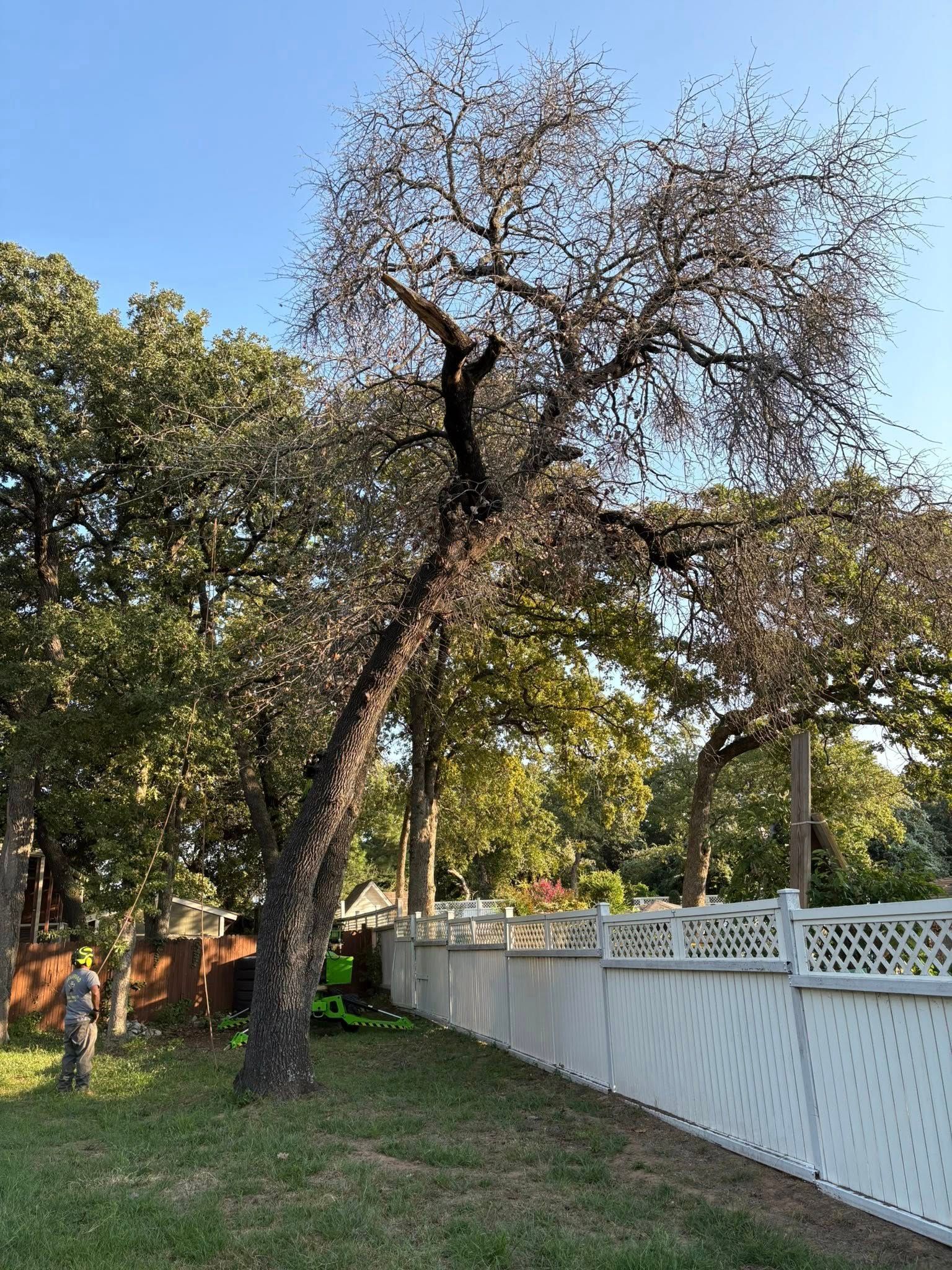
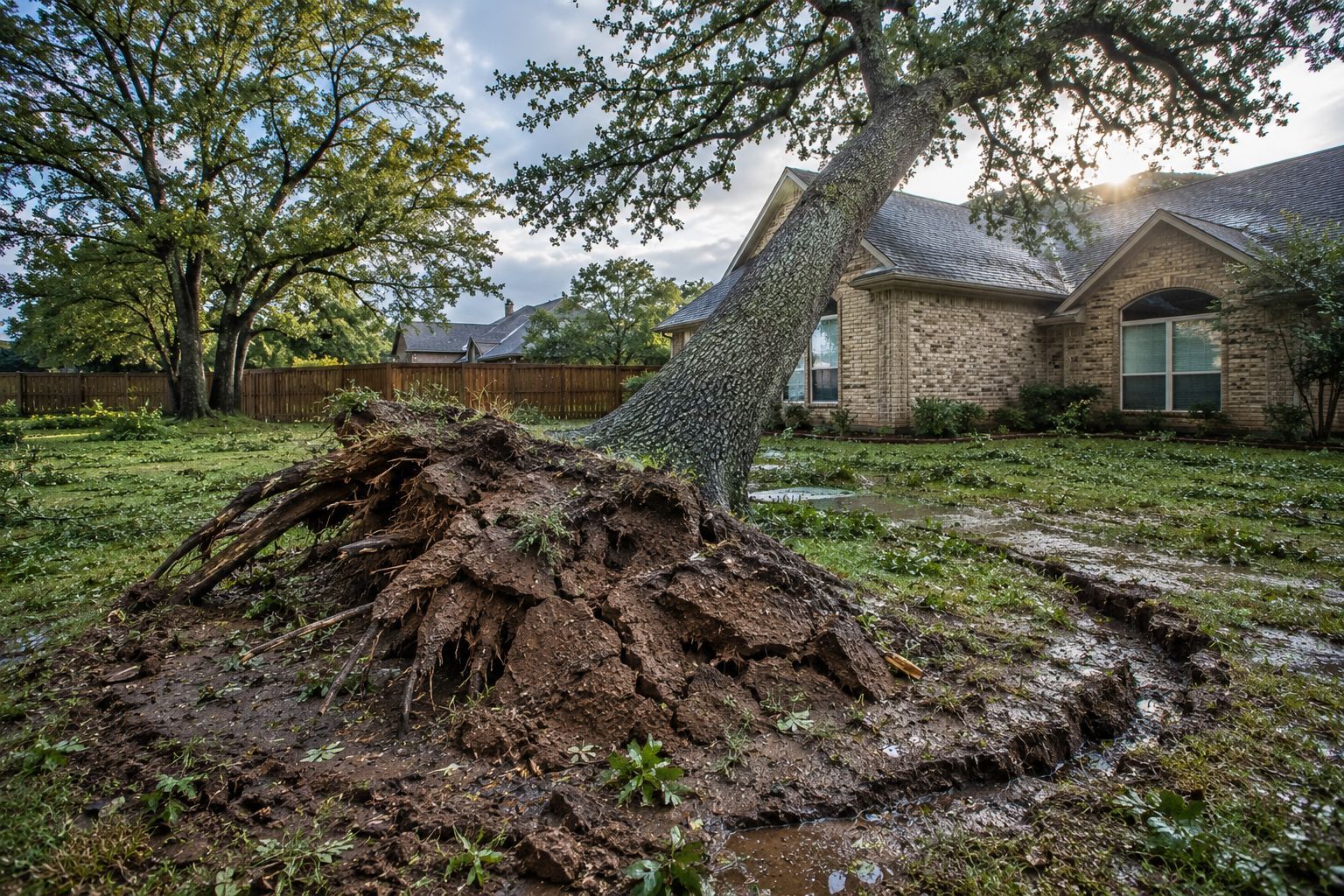
WARNING: Never push on, prune, or stand under a leaning tree with cracked soil or lifted roots on one side. It can drop with almost no warning, and getting close to inspect it is how people get hurt. Have it checked from a safe distance.
WARNING: Never push on, prune, or stand under a leaning tree with cracked soil or lifted roots on one side. It can drop with almost no warning, and getting close to inspect it is how people get hurt. Have it checked from a safe distance.
Quick Answer: A tree with dead limbs or bare branches scattered through the canopy is showing you it can no longer move water and nutrients to every part of its structure. Arborists call these dead sections "widow makers" because they can break free and fall with no warning, even on a still day. In Parker County, the usual triggers are drought stress, oak wilt, storm-damaged roots, or old pruning wounds that never closed. A single dead limb near the top of an otherwise full tree is worth watching. Bare branches scattered through multiple sections of the canopy, or dieback that keeps spreading year over year, is worth a professional look before the next wind event decides for you.
You notice it on a walk around the yard — a branch near the top of the oak that never leafed out this spring, while everything around it is green and full. Or maybe it's the opposite: last year the canopy looked fine, and now there are three or four bare limbs scattered through the crown that weren't there before. Either way, your eye caught something the tree is trying to tell you, and it's worth listening.
Dead wood in a canopy isn't cosmetic. It's a structural signal. Live branches bend, flex, and shed energy in the wind because they're still full of moisture and connected to the tree's vascular system. Dead branches don't. They're dry, brittle, and disconnected from whatever is keeping the rest of the tree alive, which means they fail differently — suddenly, without the bending or cracking sound that usually gives you a warning. That's the reason arborists nicknamed them widow makers. A limb that's been dead for two years can hang in a canopy looking stable and then come down in a stiff breeze that barely moves the leaves around it.
What Dead Limbs and Bare Branches Actually Tell You
A tree doesn't send resources to a branch it can't support anymore. When water, sugars, and nutrients get cut off to a section of the crown — because of a blocked vessel, a root problem, a disease, or plain drought stress — that section goes first. The leaves stop forming, the bark dries and tightens, and eventually the wood itself turns brittle. What you're looking at from the ground is the visible end result of something that started underground or deep inside the trunk months or years earlier.
Isolated Dead Limb
One or two dead branches in a canopy that's otherwise full and green usually points to a localized issue — storm damage, a borer, a cracked branch collar, or simple old age on that specific limb. It's still a hazard if it's over something you care about, but it's not necessarily a sign the whole tree is failing.
Scattered Dieback
Dead branches showing up in multiple, unconnected parts of the crown is a different story. That pattern usually means the tree as a whole is under stress — drought, root damage, disease, or a combination — and the dieback is spreading rather than staying put. This is the pattern that deserves a full tree health inspection, not a quick trim of the visible pieces.
Thinning Instead Of Bare Wood
Sometimes you don't get clean dead branches — you get a canopy that's just thinner than it used to be, with smaller leaves, lighter color, and gaps where fullness used to be. That's often an earlier stage of the same process, and it's actually the better time to catch it, before entire limbs go fully dead.
TIP: Walk your property after the leaves are fully out in late spring, not during winter dormancy. Bare branches are much easier to spot against a full green canopy than against a bare winter silhouette, and you'll catch new dieback earlier in the season when there's more time to respond before storm season peaks.
Why North Texas Trees Develop Canopy Dieback
Parker County's tree stress usually traces back to a handful of repeat offenders, and most properties around Weatherford deal with more than one at a time.
Drought Stress
Extended dry periods force trees to ration water, often sacrificing outer canopy branches first. Repeated drought can deplete stored reserves and cause noticeable dieback without disease. Established trees may recover when moisture returns, but branches that have already died will not produce new growth.
Oak Wilt
Oak wilt disrupts water movement through affected trees and can cause rapid canopy decline. Red oaks may die quickly, while live oaks can spread the disease through interconnected roots. When multiple nearby oaks show dieback, oak wilt should be considered before pruning or disturbing affected trees.
Root Damage and Site Stress
Construction, trenching, compacted soil, irrigation work, and new driveways can damage roots beneath or beyond the canopy. Because symptoms may not appear until a season or two later, homeowners often overlook the connection. Root disturbance can gradually reduce water uptake, leading to thinning foliage and branch dieback.
Storm and Wind History
Storm damage can leave cracked branch collars, torn bark, or partially weakened limbs that remain attached for months. As damaged connections deteriorate, branches become increasingly unstable and may fail during another wind event. Previous storm damage should therefore be considered when evaluating unexplained deadwood or sudden canopy decline.
Rocky Clay Soil
Heavy clay soils common around Parker County can hold excessive moisture after rainfall before becoming extremely hard during dry conditions. These fluctuations place ongoing stress on tree roots and can limit recovery. Trees growing in poorly balanced soil conditions may therefore show drought symptoms and canopy decline sooner.
Reading the Rest of the Tree, Not Just the Branches
Dead limbs rarely show up alone. Before deciding whether a tree needs monitoring, pruning, or removal, look at the whole structure — not just the obvious bare wood.
A tree that gets flagged for one dead branch often turns out to have two or three other symptoms nobody noticed until someone walked the base.
Trunk And Bark
Cracks, vertical splits, cavities, or areas of missing bark point to structural weakness that dead branches alone won't tell you about. Two cracks on opposite sides of a trunk is a particularly serious combination, since it can indicate internal decay running through the core.
Base And Root Flare
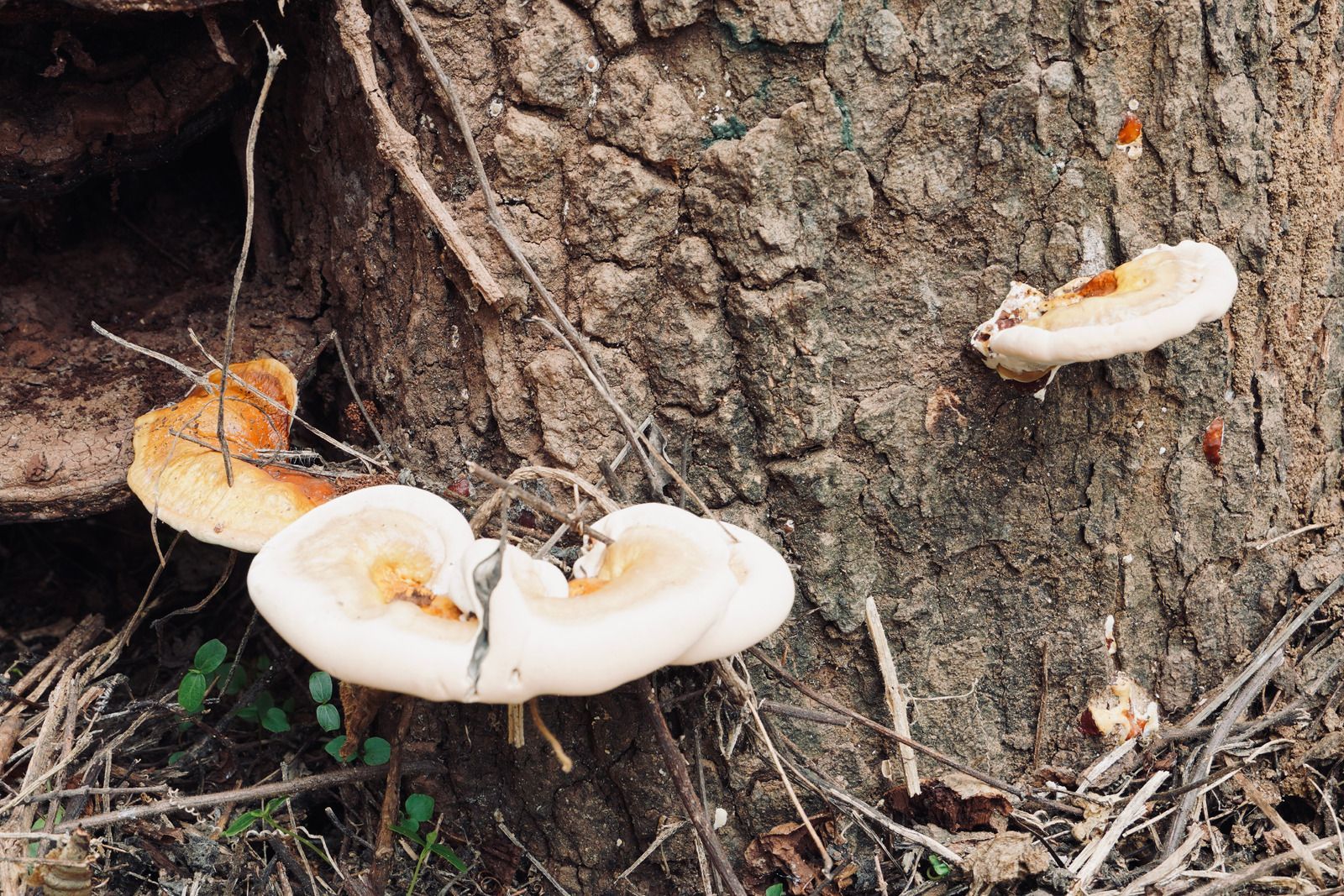
Mushrooms or conks growing at the base of the trunk are a sign of active decay inside the root system, even if the tree above ground still looks reasonably full. Heaving, cracked, or buckled soil near the base can mean the roots are losing their grip.
Lean
A tree that has developed a new lean, or one where the ground on one side looks disturbed, may be losing root support rather than just canopy branches. This combination — new lean plus canopy dieback — moves a tree up the priority list quickly.
Attachment Points
Where a dead limb meets a live one, or where two trunks join in a narrow V shape, is often the weakest point in the whole structure. Dead wood at one of these junctions carries more risk than the same dead wood out on an open branch, because the failure point affects more of the tree above it.
WARNING: A tree showing canopy dieback combined with a new lean, root-area mushrooms, or trunk cracks should not be climbed, pruned, or handled without a professional assessment first. These combinations are exactly the conditions that lead to unpredictable, whole-tree failure rather than a single branch coming down.
What Happens After the Assessment
Once a tree's been evaluated, the response depends entirely on what's causing the dieback and how much of the structure is affected.
Selective Pruning
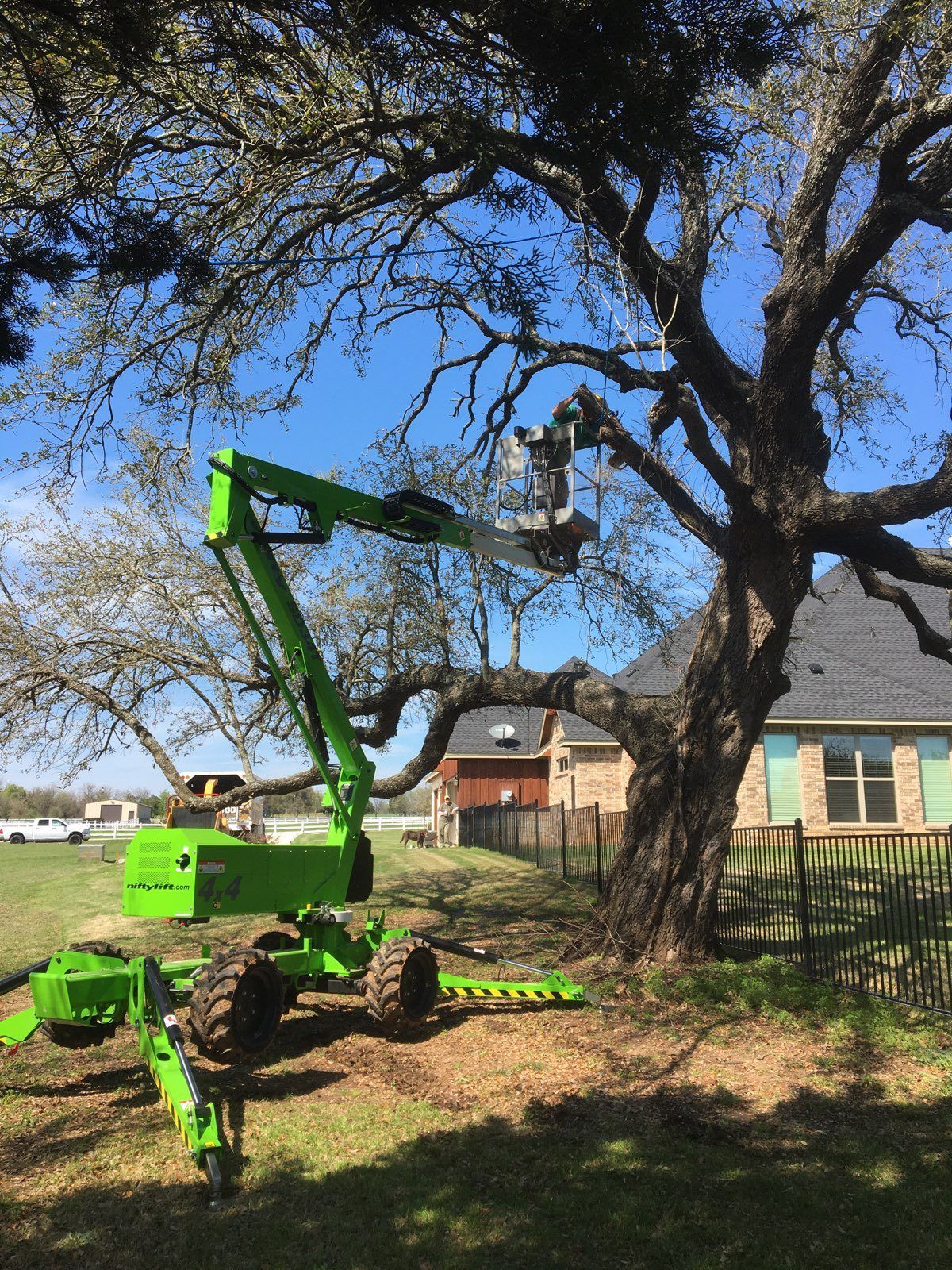
If the dead wood is limited and the rest of the tree is structurally sound, removing the affected limbs — cleanly, at the right point, without leaving stubs or tearing live bark — solves the immediate hazard without touching a tree that still has years of healthy growth ahead of it.
Monitoring
Early-stage thinning or a single small dead branch on an otherwise vigorous tree sometimes just needs a documented baseline and a follow-up look next season, especially if a likely cause — like a dry summer — has already been identified and addressed.
Cabling Or Bracing
Trees with a structurally important but weakened section, like a codominant trunk with one side declining, can sometimes be supported rather than reduced, buying years of additional life for a tree that would otherwise need significant limb removal.
Removal
When dieback is widespread, root damage is confirmed, or the combination of symptoms points to advanced internal decay, removal becomes the responsible option — not because the tree failed to be saved, but because the risk of waiting outweighs what's left to preserve.
None of these decisions should be made from a photo or a quick look over the fence. The difference between a tree that needs one limb removed and a tree that needs to come down entirely usually isn't visible from the ground.
But it's rarely a mystery once someone's actually up in the canopy or down at the root flare with a probe. It's in the trunk, the roots, and how the dead sections connect to what's still alive.
Frequently Asked Questions
How can I tell if a branch is dead versus just dormant?
Scratch a small area of bark. Live wood is typically green or moist underneath, while dead wood is dry and brown or gray. Dormant branches can lack leaves but still contain living tissue.
Does one dead branch mean the whole tree is dying?
Not necessarily. One dead branch may result from old damage, pests, disease, or natural decline. Concern increases when dead branches appear across multiple areas or continue increasing during successive growing seasons.
How fast can a tree go from a few dead branches to a full hazard?
The timeline depends on the cause. Drought stress may develop gradually, while diseases such as oak wilt can cause rapid decline. Worsening dieback, structural damage, or root problems can increase risk quickly.
Can I just cut off the dead branches myself?
Small, reachable branches may be manageable, but larger limbs require caution. Ladders, chainsaws, power lines, and overhead deadwood create serious hazards, particularly when hidden structural problems could make branches unpredictable during removal.
Is canopy dieback reversible?
Dead wood cannot recover, but the tree may stop declining when the underlying stress is corrected. Proper watering, addressing root problems, and reducing additional stress can sometimes encourage healthy new growth from remaining living branches.
Should I worry about dieback in a tree that isn't an oak?
Yes. Trees such as cedar elm, mesquite, and post oak can develop dieback from drought, root damage, disease, or storms. Any spreading canopy decline deserves attention, regardless of the tree species involved.
What Dead Limbs Reveal About Tree Health
In Weatherford, TX, dead limbs and scattered canopy dieback can develop from drought, disease, root damage, or storm stress. While one isolated branch may not indicate a serious problem, repeated dieback across the canopy deserves closer attention. Deadwood Services, with 8+ years of experience serving Weatherford, TX, evaluates the entire tree to understand whether the issue is limited to a few branches or points to a deeper structural or health concern.
Understanding the cause is important because dead wood does not recover, and continued decline can change the risk profile of the entire tree. Looking at the trunk, root flare, attachment points, and surrounding site conditions alongside the canopy provides a clearer picture of what the tree needs. In many cases, timely pruning or monitoring can preserve a healthy tree, while more advanced decline may require a different approach.