
Dead Trees: How They Impact Your Yard, Safety, and Property Value
June 29, 2026

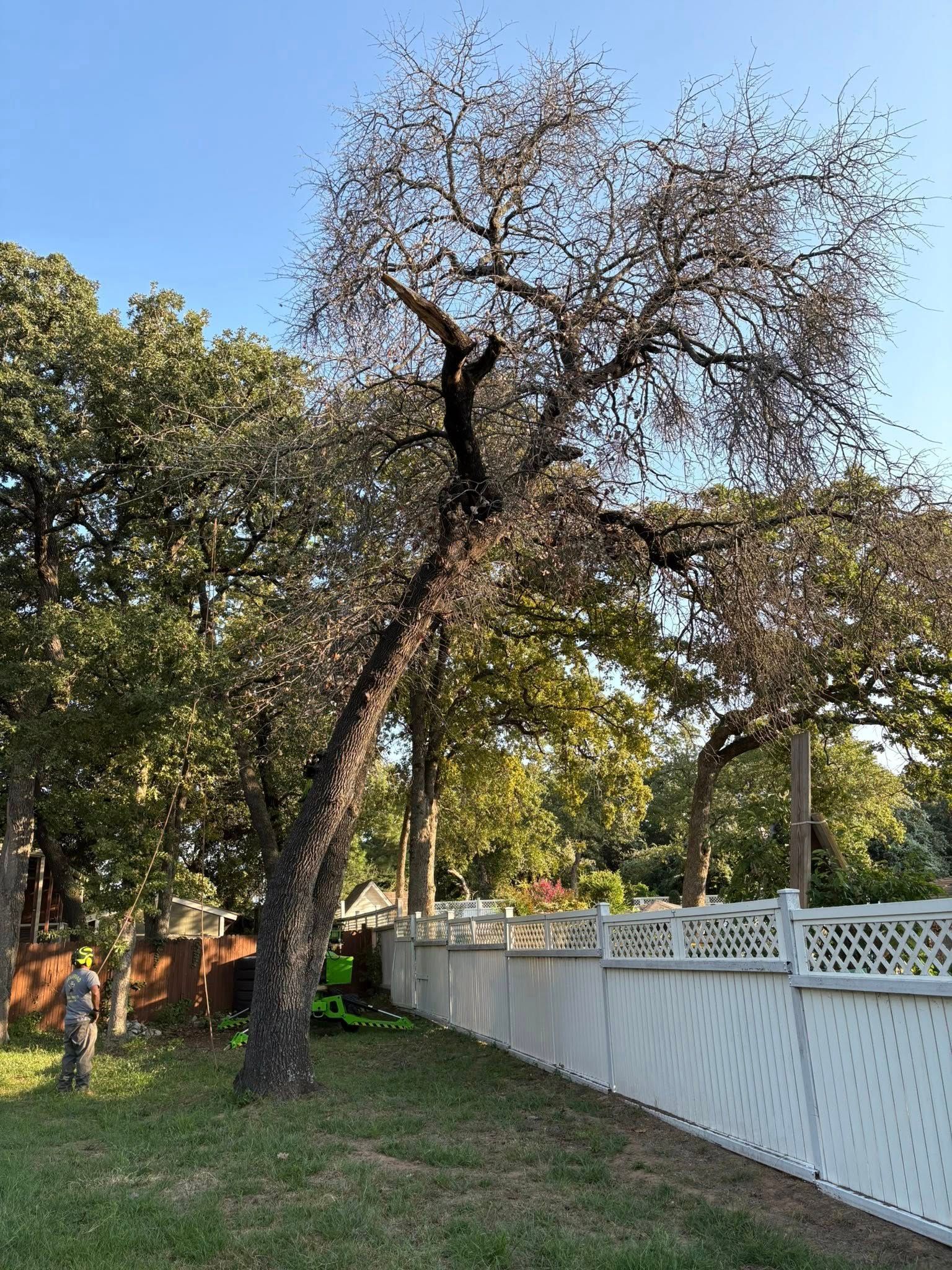
You walk out back in late spring, coffee in hand, and notice the old oak near the fence still looks bare while every other tree on the block has filled in green. Weeks pass and nothing changes. Then a sheet of bark slides off the trunk into the grass, and you start wondering whether the tree is sick, sleeping, or already gone.
Here is the short version. A tree that stays bare through the growing season, sheds bark in plates, and snaps brittle instead of bending is almost certainly dead, and a dead tree near your house, driveway, or power line grows more dangerous every month it stands. We have worked under hundreds of these across North Texas, and the pattern holds. The wood dries, the roots lose their grip, and what looks solid on a calm afternoon is the first thing to fail when the wind picks up.
Dead or Dormant: How to Know the Difference
The fastest way to separate a dead tree from a dormant one is the scratch test, and it takes under a minute. Scrape back a patch of bark or a twig with your thumbnail. Living wood underneath is green and slightly moist. Brown, dry, and brittle means that section is gone. Check several spots, since a tree can lose one limb while the rest hangs on.
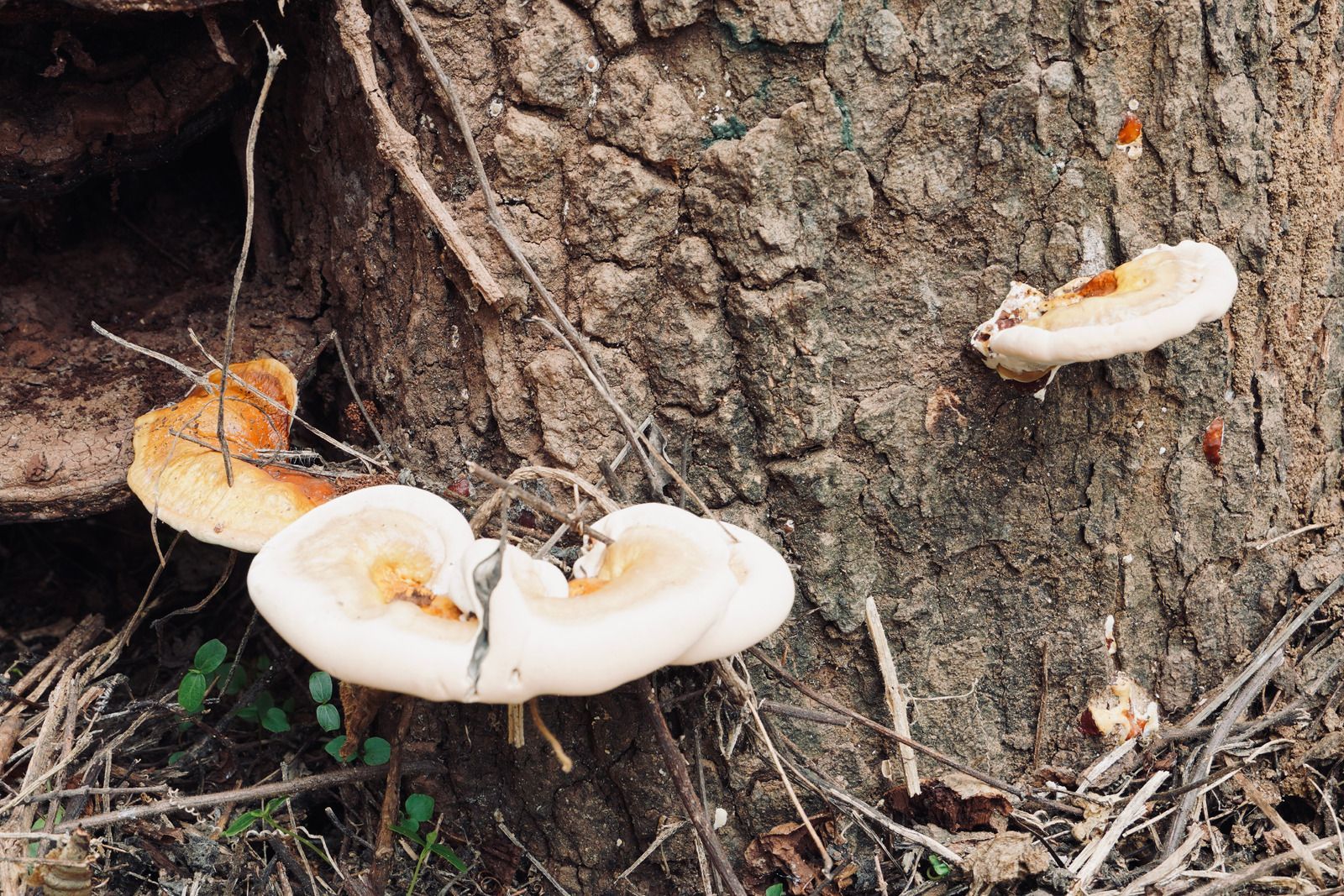
Walk the trunk next. Look for bark peeling in plates, deep vertical cracks, soft hollow spots, and mushrooms or shelf fungus at the base. Fungus at the soil line worries us most, since it usually means the roots and lower trunk are already rotting from the inside.
TIP:
Run the scratch test on the highest limbs you can safely reach, not just the low ones. Trees often die from the top down, so a green trunk with bare upper branches is an early warning, not a clean bill of health.
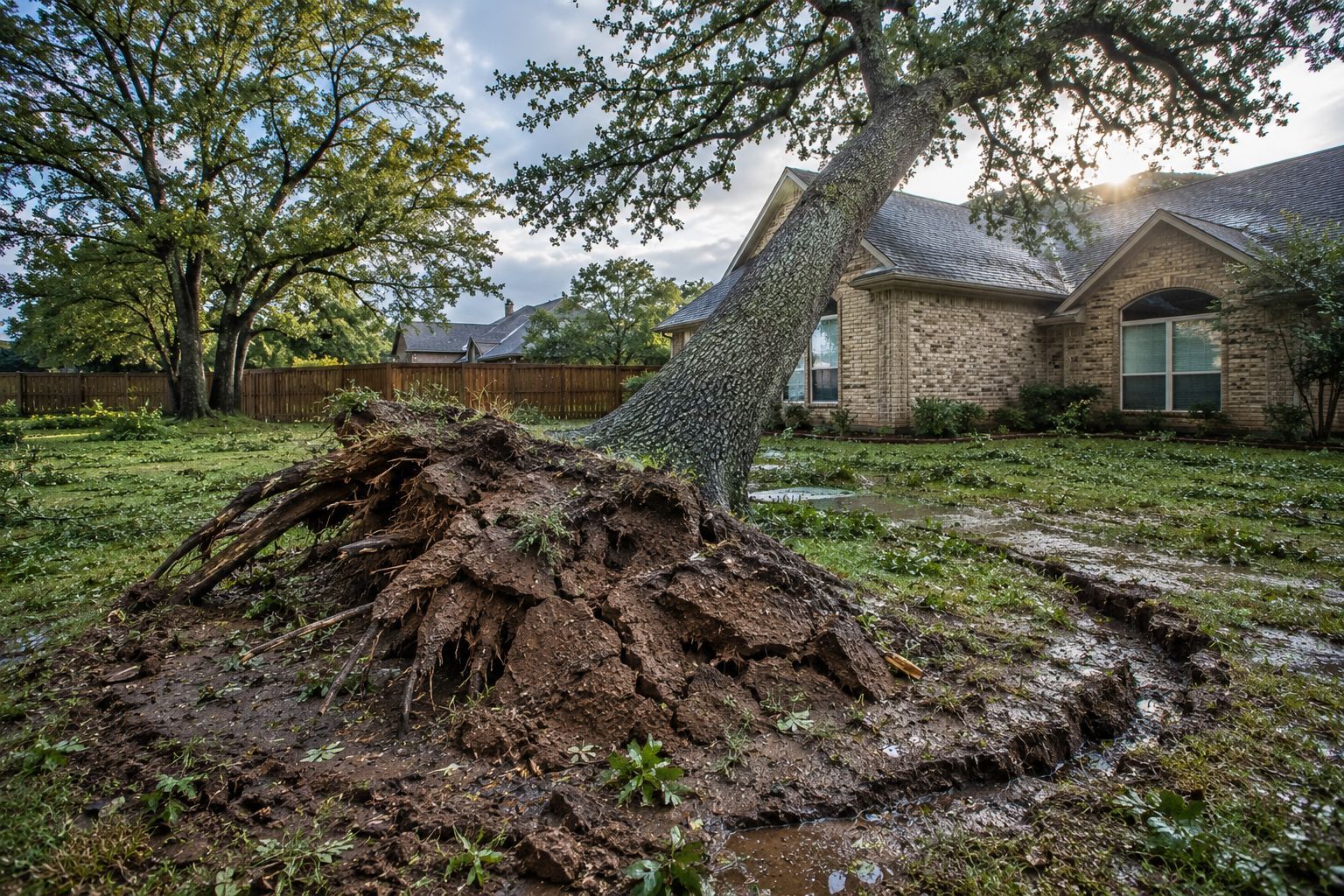
WARNING: Never push on, prune, or stand under a leaning tree with cracked soil or lifted roots on one side. It can drop with almost no warning, and getting close to inspect it is how people get hurt. Have it checked from a safe distance.
Why a Standing Dead Tree Is a Safety Risk
A dead tree fails differently than a living one. Living wood flexes in wind because its fibers still hold moisture. Once it dies, those fibers dry and turn brittle, so limbs break clean instead of bending, often with no warning sound.
The bigger threat sits underground. When fungi rot the root collar, the tree loses its anchor. It can stand through months of calm and then topple in the first strong gust, usually onto the closest target, which in most yards is the house. We see the most failures after spring storms and winter ice loads, when added weight finds the weak point.
What Actually Killed Your Tree
Drought stress in heavy clay soil is the most common killer we find here. Our ground swells when it rains and shrinks hard in dry spells, and that movement tears the fine feeder roots a tree relies on for water. A few brutal summers in a row leave oaks and elms too weak to recover, so they decline over two or three seasons rather than overnight.
Two problems usually finish a stressed tree. Hypoxylon canker is a fungus that lives harmlessly on healthy bark but moves in once an oak weakens, leaving a dusty brown patch where the outer bark sloughs away. Oak wilt clogs the vessels that carry water up the trunk and can run through a row of connected oaks in one season. Borers pile on, tunneling the inner bark of any stressed tree and cutting its last working pathways.
What a Dead Tree Does to Your Yard and Value
A dead tree does not just sit there. The trunk becomes a nursery for borers, carpenter ants, and decay fungi that rarely stay put. They move into nearby healthy trees, the fence, and the framing of a deck or shed. One dead oak left standing can seed problems across a property within a couple of years.
Curb appeal takes the visible hit, but the liability is what costs you. A buyer touring the home reads a large dead tree near the roofline as both an eyesore and an expense they inherit, and that shows up in the offer. A dead tree over living space plainly signals work that was put off.
How We Inspect a Dead Tree
Remove It Now or Wait
We start at the top and work down, reading the canopy for the share of bare versus leafed limbs to separate decline from full death. Then we sound the trunk with a mallet, listening for the hollow tone that points to internal decay, and probe soft spots to judge how far the rot has spread.
The base decides the urgency. We check the root collar for fungus, lifted soil, and movement, since a rotten anchor turns a slow problem into an immediate one. On service calls we frequently find a trunk that looks solid sitting on roots that have already failed. That gap, between how a tree looks and how it stands, is why a real inspection matters before anyone decides to wait.
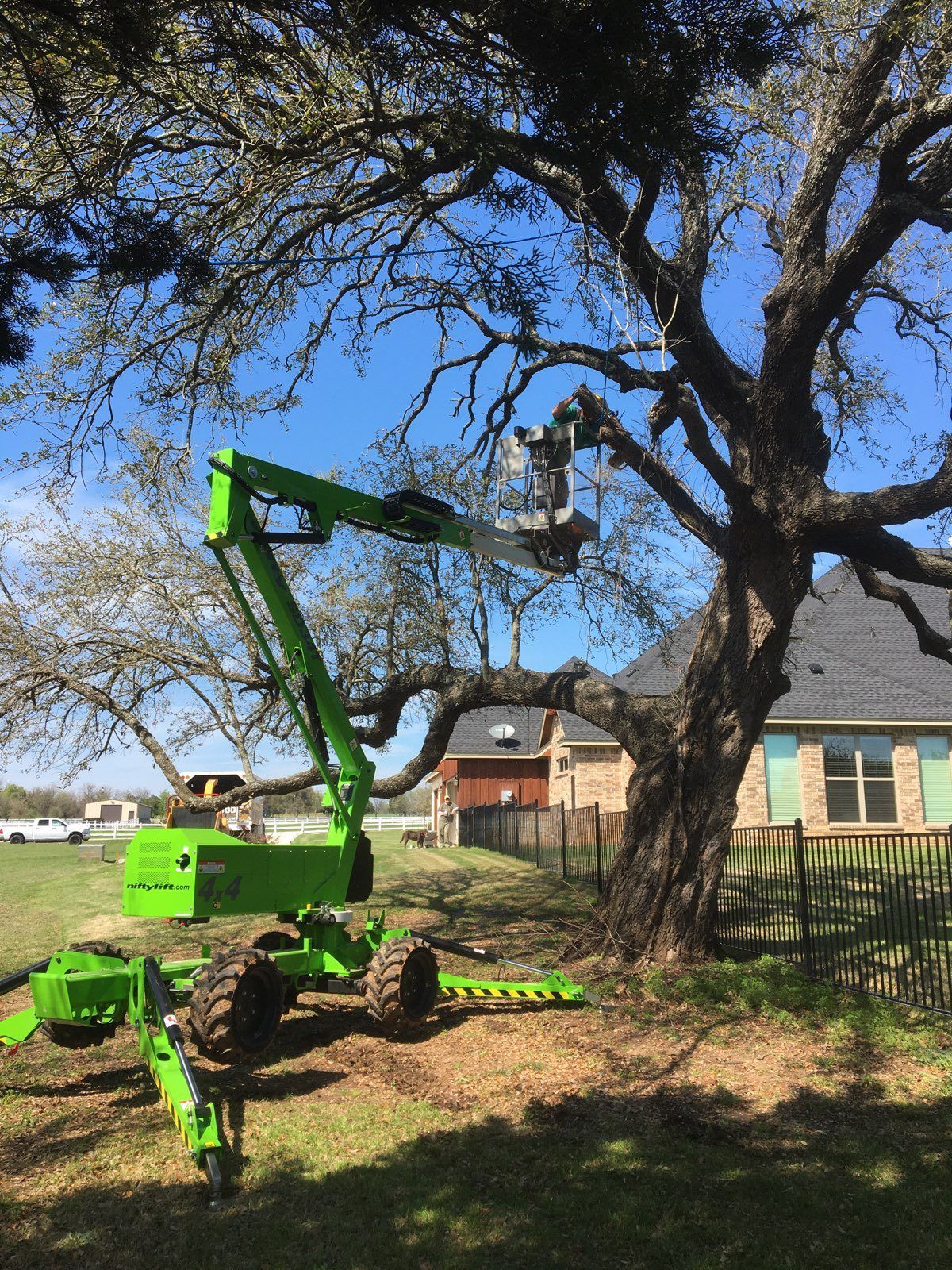
Honest answer: a dead tree well away from anything you value can sometimes stand a while, while one over your house or driveway needs to come down soon. Sound roots with no targets below buy time. Fungus at the collar, a fresh lean, or limbs over living space mean the clock is running. A small dead tree in the open is manageable, but a large one wedged between a fence, a power line, and the roof is precise rigging work where a wrong cut sends a limb the wrong way. That is where this stops being a weekend project.
Protecting the Trees You Still Have
Most tree deaths we see were preventable. Deep water mature trees during dry stretches, slowly and out at the canopy edge where the active roots live, not a quick spray at the trunk. Keep a few inches of mulch over the root zone, but pull it back off the bark so the trunk stays dry. Walk your trees each season and watch for bark changes, thinning leaves, or fungus.
One regional habit matters most: avoid pruning oaks in the warm months when the beetles that carry oak wilt are active. Save major cuts for the coldest part of winter, and seal any fresh wound right away. That one timing choice prevents a large share of the oak losses we see.
Frequently Asked Questions
How quickly should a dead tree be removed?
It depends on location. A dead tree leaning over your house, driveway, or a power line should come down within a few weeks, since the failure risk climbs higher with every passing storm. One standing alone out in an open field, with sound roots and nothing of value below, can usually wait out a full season under careful, regular monitoring.
Is it safe to leave a dead tree standing through winter?
Generally no, especially here in our region. Winter ice loads add real weight that brittle, dead limbs simply cannot carry, and that is exactly when we see the most sudden, unexpected failures happen across yards. A dead tree standing near anything you value should always be taken down well before the very first hard freeze of the winter season hits.
Why do oak trees die so often in North Texas?
Our heavy clay soil swells and shrinks with each wet and dry cycle, slowly shearing the fine feeder roots that oaks depend on for water. That ongoing drought stress then opens the door to hypoxylon canker and oak wilt, two stubborn problems that quietly finish off trees already weakened by several repeated hot, dry, demanding summers in a row here.
Can a dead tree spread disease to my healthy trees?
Yes, and that is often overlooked. A dead trunk becomes a host for borers, carpenter ants, and decay fungi, and those pests move readily into nearby healthy trees, fences, and wood structures around your property. Oak wilt also travels underground through connected roots, so one infected oak can quietly threaten an entire row of neighboring oaks before symptoms even show.
Will removing a dead tree help my property value?
Usually, yes. A large dead tree near the home reads to prospective buyers as both an eyesore and a future expense they will inherit, which softens the offers you receive. Clearing it restores curb appeal and removes a visible liability, signaling clearly to nearly anyone who visits that the property itself has been carefully and properly maintained over the years.
Dependable Removal When Your Dead Tree Cannot Wait
The principle to carry away is simple: a
dead tree
is most dangerous in the gap between how solid it looks and how poorly it actually stands, and only a real inspection closes that gap. That risk runs higher around here, where clay soil, drought summers, and constant oak wilt pressure push our trees toward failure faster than the national average. When you are ready to have one looked at honestly, our crew at Deadwood Services
has spent more than 8
years removing and assessing hazardous trees across Weatherford, Texas, and we will tell you plainly whether yours can wait or needs to come down.